Chakra Meditation: A Step-by-Step Script From Root to Crown
A chakra meditation is a guided practice in which you move your attention slowly through the seven chakras, from the base of the spine to the crown of the head, using breath, a body location and often a seed syllable for each. The full script below takes about 15 to 20 minutes, and there's a 5-minute version at the end. It comes from yogic and tantric traditions; there's no scientific evidence that chakras physically exist, but the practice works as a calm, structured way to pay attention to your body and your inner life.
If you'd like background on each center first, see the seven chakras explained. Otherwise, find a quiet spot and begin.
Before you start
- Posture. Sit on a chair with your feet flat, or on a cushion with your hips a little higher than your knees. Lying down works too, though you may get sleepy.
- Timing. Read the script once or twice, then practice from memory. You can also record yourself reading it slowly and play it back.
- Sound. Each chakra has a traditional seed syllable, or bija mantra. Chant it softly, whisper it or say it silently. All three are fine.
- Colors. The rainbow colors are a modern Western addition. Use them if they help, skip them if they don't.
- Comfort. If any breathing step makes you lightheaded, return to normal breathing. If meditation brings up distressing memories or feelings, stop, open your eyes and ground yourself. Talking with a doctor or licensed therapist is a good idea if that happens often.
The full chakra meditation script (15-20 minutes)
Spend about two minutes on each chakra. Roughly three breaths with the mantra, then a minute or so of quiet attention.
- Settle in (2 minutes). Close your eyes or lower your gaze. Take three slow breaths, letting each exhale be a little longer than the inhale. Notice the weight of your body on the chair or floor. Let your shoulders drop.
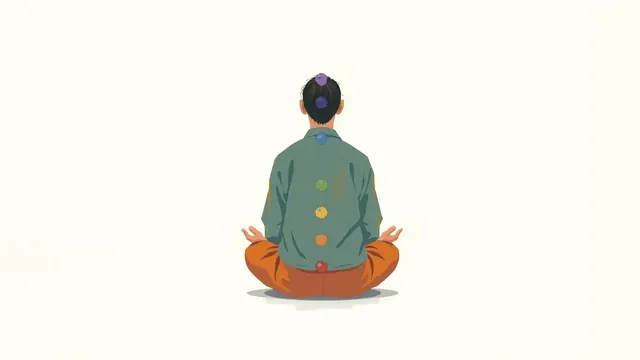
- Root, Muladhara (2 minutes). Bring your attention to the base of your spine and the places where your body touches the ground. If it helps, imagine a warm red glow there. Breathe in slowly. On the exhale, chant LAM (pronounced "lahm") softly, letting the sound hum low. Repeat three times. Then rest and silently ask, "What helps me feel safe?" Don't chase an answer. Just notice.
- Sacral, Svadhisthana (2 minutes). Move your attention to your lower belly, a few inches below the navel. Picture orange, or simply feel the rise and fall of your belly. Chant VAM ("vahm") three times on the exhale. Rest, and notice any feeling present without judging it. Let emotions move like water: arriving, shifting, passing.
- Solar plexus, Manipura (2 minutes). Bring awareness to your upper belly, just below the ribs. Imagine a steady yellow warmth, like late-afternoon sun. Chant RAM ("rahm") three times. Rest, and recall one thing you handled well this week. Let yourself feel capable for a moment.
- Heart, Anahata (2 minutes). Shift your attention to the center of your chest. Picture soft green, or feel your breath widening your ribs. Chant YAM ("yahm") three times. Rest, and bring to mind someone you care about. Silently wish them well. Then offer the same wish to yourself.
- Throat, Vishuddha (2 minutes). Move your attention to your throat. Imagine clear sky blue. Swallow once and let your jaw soften. Chant HAM ("hahm") three times, feeling the vibration in your throat. Rest, and ask, "What is true for me right now?" Let a simple, honest phrase arise.
- Third eye, Ajna (2 minutes). Bring your attention to the point between your eyebrows. Picture deep indigo, or simply let your eyes relax behind closed lids. Chant OM ("ohm," or "AUM") three times. Many modern sources use OM here, though traditions vary. Rest in the quiet afterward and notice whatever images or impressions come, without analyzing them.
- Crown, Sahasrara (2-3 minutes). Lift your attention to the top of your head. Imagine violet or soft white light, or an open sky above you. Some traditions use OM for the crown and others use silence, so choose what feels right. You might chant OM once, then stay silent. Rest in open awareness, noticing the space around you and the sense of being part of something larger.
- Return down the spine (1-2 minutes). Slowly move your attention back down through each area: crown, brow, throat, chest, upper belly, lower belly, base of the spine. Spend one breath at each. This helps you feel grounded before you get up.
- Close (1 minute). Feel your feet and hands. Wiggle your fingers and toes. Take one deeper breath, open your eyes and look around the room. Before you stand, name one small action you'll take today that fits whatever came up.
The 5-minute chakra meditation
For busy mornings or a reset between tasks.
- Arrive (30 seconds). Sit tall, close your eyes and take two slow breaths.
- One breath per chakra (3 minutes). Starting at the root, move up one chakra at a time. Breathe in while resting attention on the area, then breathe out while saying its syllable silently: LAM, VAM, RAM, YAM, HAM, OM. At the crown, rest in a moment of silence. Then repeat the whole sequence once more.
- Pick one (1 minute). Notice which area felt tense, flat or interesting. Rest your attention there for a few slow breaths.
- Ground and go (30 seconds). Feel your feet, open your eyes and choose one small action linked to that chakra's theme.
Tips for going deeper
Focus on one chakra for a week. If a particular center keeps drawing your attention, give it longer sessions. The heart chakra is a common starting point because its themes of kindness and connection are easy to feel in the body. The third eye chakra suits people who want to strengthen intuition and quiet focus.
Add a body scan. This script moves along the spine, while a body scan meditation moves through the whole body. Alternating the two builds steadier body awareness, which is the foundation of most chakra work.
Use it as a check-in, not a test. It's normal for some areas to feel blank or for your mind to wander often. That doesn't mean a chakra is "broken." If you want to explore what practitioners mean by a stuck or overactive center, read our honest guide to blocked chakras.
Pair it with action. Meditation can help you notice what matters. Changing your life still takes choices: the call you make, the boundary you set, the habit you build. For more ways to combine breath, movement and journaling, see our chakra balancing guide.
What to expect, honestly
Research on meditation for stress and attention is active, and some studies suggest meditation in general may help people feel calmer. There's no scientific evidence that chakra meditation specifically opens, aligns or heals anything in the body. Many people simply find that a structured, repeated practice gives them a quiet space to reflect.
You don't need to buy anything to do this meditation. If you'd like to try more sound-based practice, our guide to mantra meditation is a good next step.
Want a structured program to go deeper?
Reading is a start. Some people do better with a guided course they can follow day by day. This button opens a manifestation or meditation program from one of our advertising partners.
See the partner program →We may be paid when you click. The program shown can change. Read its terms before you buy anything. How this works
Frequently asked questions
How long should a chakra meditation be?
The full script here takes about 15 to 20 minutes, but a 5-minute version works well on busy days. Consistency matters more than length.
Do I have to chant the bija mantras out loud?
No. You can chant softly, whisper or repeat each syllable silently. Some people skip sound entirely and simply rest attention on each area.
What if I can't visualize the colors?
That's very common and completely fine. Colors are a modern addition to the tradition. Noticing physical sensation or simply the location works just as well.