How to Cleanse and Charge Crystals (Without Damaging Them)
To cleanse a crystal, practitioners use methods like running water, moonlight, sound, smoke, salt or resting it on another stone, with the idea of clearing away energy it has "absorbed." The key practical rule: match the method to the stone, because water, salt and sunlight can permanently damage many popular crystals. Cleansing is a symbolic ritual, and there's no scientific evidence that crystals hold or release energy.
This guide is part of our crystal meanings section. If you're new to stones, start with crystals for beginners.
Why people cleanse crystals
In crystal belief, stones pick up energy from people and places, and cleansing "resets" them so they're ready for a new intention. There's no scientific evidence for this. Small experiments comparing real crystals with convincing fakes found people reported similar feelings either way, which suggests what people feel comes from expectation and ritual rather than the stone itself.
Even so, a cleansing ritual can be a useful pause. Taking a few minutes to handle a stone, set it somewhere quiet and restate why it matters to you is a simple way to refresh your own attention. Treat it as a reset for you, and choose methods that won't harm the stone.
Crystal cleansing methods compared
Use this table to choose a method. When in doubt, pick one of the gentle, no-contact options.
| Method | How people do it | NOT safe for |
|---|---|---|
| Running water | Hold the stone under cool tap or stream water for a minute, then pat dry right away | Selenite, lapis lazuli and other soft or porous stones; dyed stones; raw clusters that trap water |
| Salt | Set the stone in a small dish on top of dry salt, or bury it in salt for a few hours | Soft or porous stones (selenite, lapis lazuli and similar) in direct contact; polished stones can scratch |
| Sunlight | Leave the stone on a windowsill for an hour or two | Amethyst, rose quartz, citrine and other colored stones, which can fade |
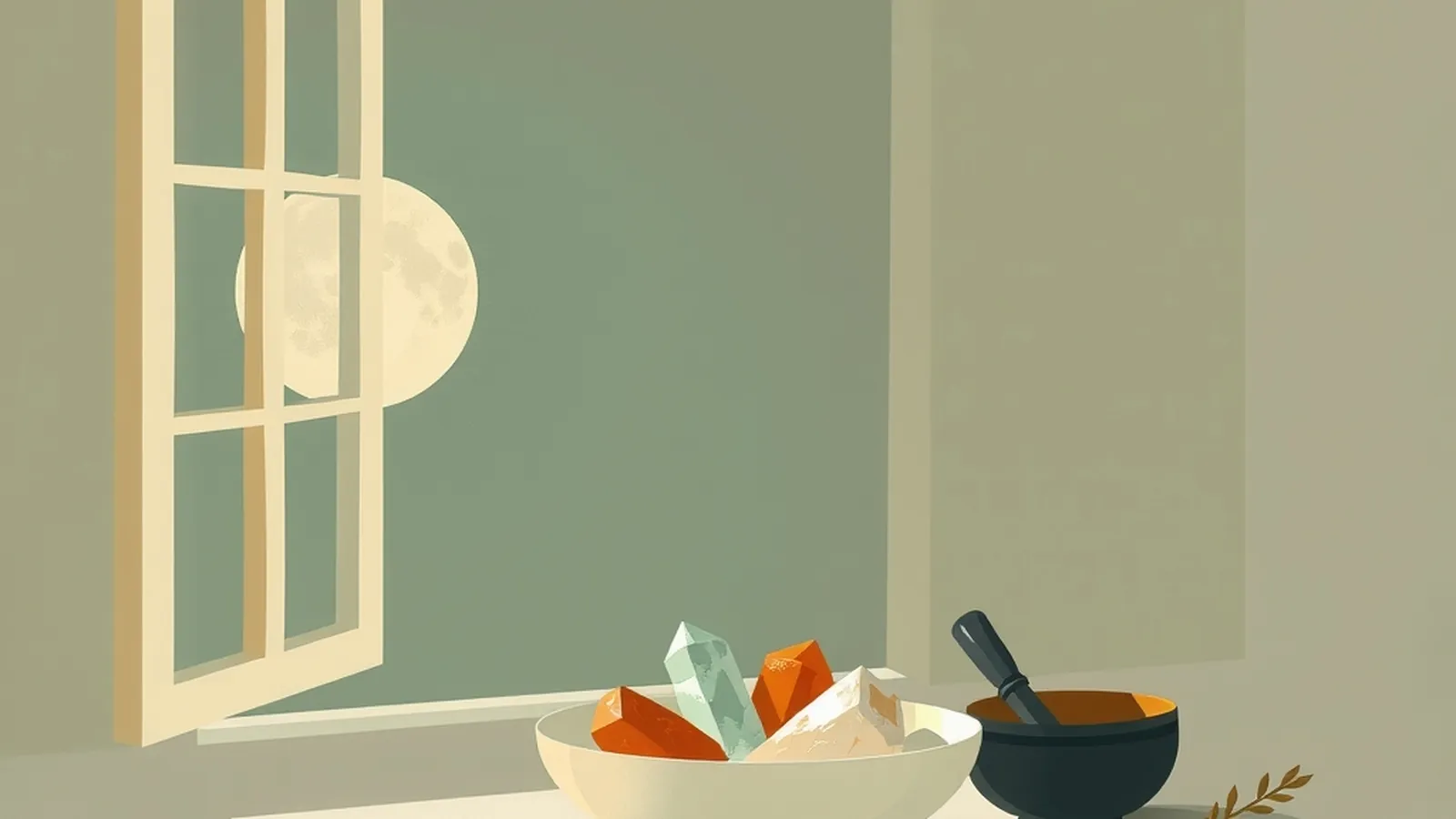
| Moonlight | Place the stone outside or on a windowsill overnight, often at the full moon | Generally safe for all; bring stones in before morning sun and keep them dry |
| Sound | Ring a singing bowl, bell, chime or tuning fork near the stone | Generally safe for all; just keep volume comfortable |
| Smoke | Pass the stone through smoke from dried herbs or incense | Safe for stones, but needs ventilation and fire safety; see the note on white sage below |
| Burying in soil | Bury the stone in a pot of soil or a marked garden spot for a day or more | Soft, porous or water-sensitive stones like selenite; anything you might lose |
| Resting on another stone | Set it on a selenite slab or near a clear quartz cluster overnight | Generally safe; keep sharp clusters from scratching softer stones |
A few stone-specific notes:
- Selenite is a soft gypsum that water damages, so never soak or rinse it. Ironically, it's also one of the most popular stones for "cleansing" others by resting them on top.
- Clear quartz is hard and water-tolerant, which makes it one of the most forgiving stones to cleanse, and clusters are often used as a resting place for other crystals.
- Black tourmaline is reasonably hard but often sold as raw, striated pieces that can trap water and dirt in their grooves, so practitioners often prefer smoke, sound or moonlight for it.
Sound cleansing
Sound is one of the gentlest options because nothing touches the stone. Practitioners believe vibration from a bowl or chime "clears" a crystal, which is a belief rather than a tested effect. Practically, the ritual of listening until a tone fades can be a calming moment in itself.
If you enjoy this, you may also like a sound bath, a meditation built around singing bowls, gongs and chimes. A simple version: set your stones nearby, strike a bowl once, and listen until the sound disappears completely. Repeat three times.
Charging crystals: what it means
"Charging" is the companion idea to cleansing. In crystal belief, once a stone has been cleansed, you "charge" or "program" it with an intention, so it acts as a reminder of a specific goal. Some people also speak of charging a stone with sunlight or moonlight, though that overlaps with cleansing.
This is a belief practice. Crystals don't store an electrical charge in this sense. Clear quartz's real piezoelectric properties are physics used in watches and electronics, not evidence of spiritual charging. What does happen is psychological: putting an intention into words while holding something tangible can help you remember it.
A simple charging ritual:
- Hold the cleansed stone in both hands.
- Take three slow breaths.
- Say your intention out loud in one present-tense sentence, such as "I'm making steady time for my writing."
- Name one concrete action that supports it this week.
- Put the stone somewhere you'll see it daily.
This pairs well with affirmations. The stone is the reminder; the action is what moves things forward.
Safety first
A few more practical tips:
- Wash your hands after handling raw or unpolished stones.
- Don't sand, cut or polish stones at home without proper dust protection.
- Keep small tumbled stones away from young children and pets; they're a choking hazard.
- Dry every stone fully after any contact with water.
A note on white sage
Burning white sage is one of the most widely shared cleansing methods online, and it deserves some thought. White sage grows mainly in Southern California and northern Mexico and is sacred to many Native American nations, who use it in ceremonies that belong to their own traditions. Its popularity has raised concerns about overharvesting from wild areas and about sacred practices being sold as a trend.
If you choose to use smoke, consider these respectful options:
- Learn where your sage came from, and favor sustainably grown sources rather than wild-harvested bundles.
- Use herbs from your own garden or heritage, such as rosemary or lavender, or simple incense.
- Avoid calling your practice "smudging," a term tied to specific Indigenous ceremonies.
- Choose sound or moonlight instead, which need no plants at all.
Keep it simple
You don't need every method, and you don't need to cleanse often. Pick one gentle approach that suits the stones you own, give it a few quiet minutes and use the moment to reconnect with your intention.
Want a structured program to go deeper?
Reading is a start. Some people do better with a guided course they can follow day by day. This button opens a manifestation or meditation program from one of our advertising partners.
See the partner program →We may be paid when you click. The program shown can change. Read its terms before you buy anything. How this works
Frequently asked questions
What is the safest way to cleanse any crystal?
Sound and moonlight are the gentlest methods because they don't touch the stone with water, salt, heat or strong light. They work for soft, porous and colored stones alike.
Can you cleanse crystals with salt water?
Salt water can scratch, dull or damage soft and porous stones such as selenite, lapis lazuli and many others. If you like using salt, set the stone in a small dish on top of dry salt rather than in contact with it or soaked in salt water.
Do you have to cleanse crystals?
No. Cleansing is a symbolic ritual in crystal practice, and there's no scientific evidence that stones hold or release energy. A simple dusting with a soft cloth is all a crystal physically needs.