Deja Vu: Spiritual Meaning and What Science Says
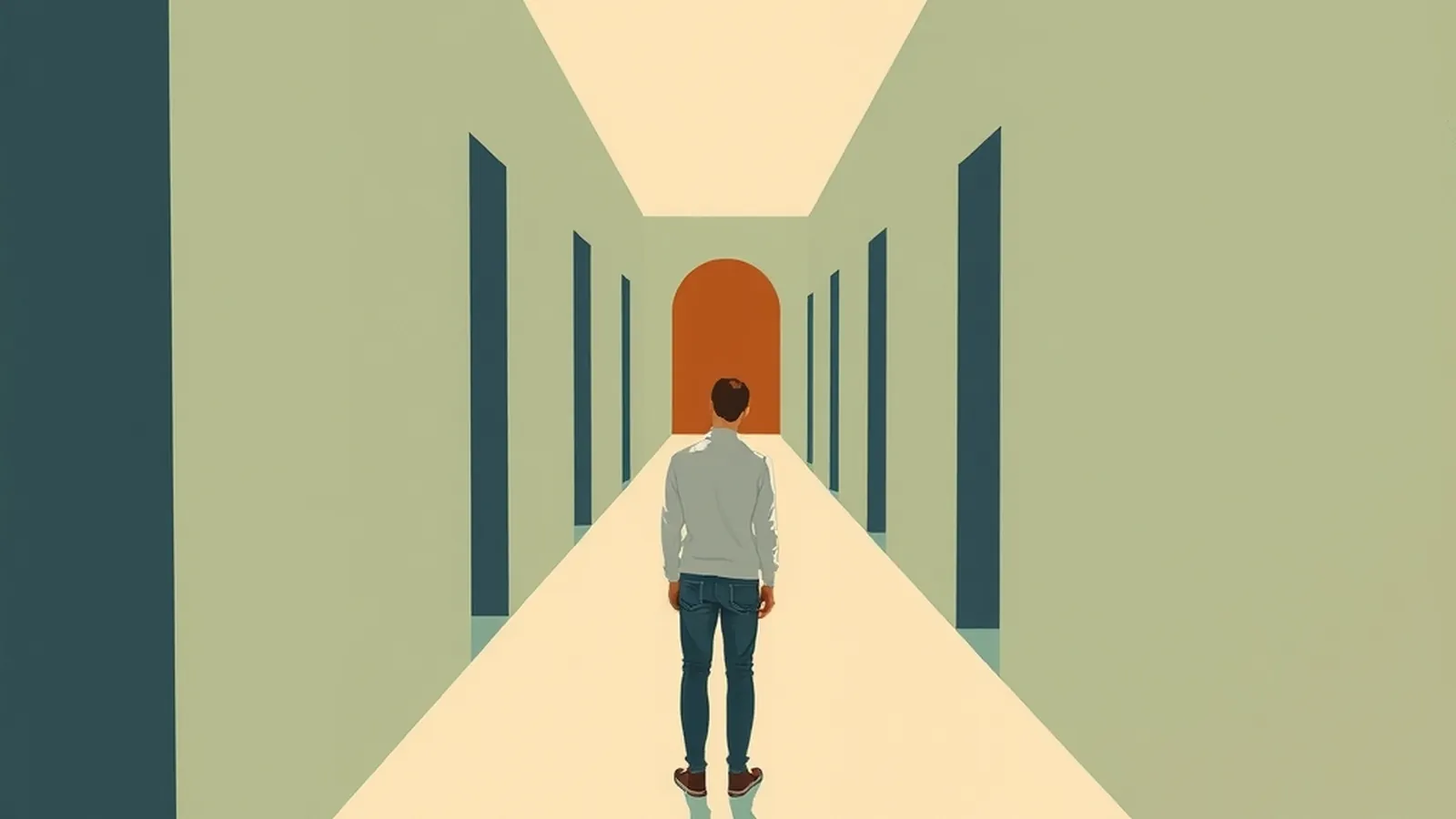
Deja vu is the strong, brief feeling that you've already lived a moment that is actually new. Spiritually, people read it as a sign of a past life, alignment with their path, or a nudge to pay attention. Scientifically, it's very common, and researchers think it relates to how the brain handles memory and the sense of familiarity.
For other experiences people read as signs, browse our spiritual meanings guide. We start with what's known about the brain, then look at the beliefs, and finish with a simple way to reflect.
What deja vu feels like
The phrase is French for "already seen". You walk into a room, hear a sentence or glance at a street corner, and for a few seconds it all feels oddly familiar. Often you can't place the memory, and part of you knows this can't be a real repeat. That clash between "I know this" and "I can't know this" is what makes deja vu feel so strange.
It usually fades within seconds. Many people say it leaves a faint, dreamy afterglow, and some try to "catch" it and find it slips away.
What science says
Deja vu is very common, and most people report having it at some point. Researchers don't have a single settled explanation, but the main ideas center on how the brain processes memory and familiarity.
Your brain constantly makes quick judgments about whether something is new or known. It can produce a feeling of familiarity separately from actually recalling a specific memory. Deja vu may happen when that familiarity signal fires without a matching memory behind it. You feel recognition, but there's nothing to recognize.
Some explanations researchers have explored include:
- A familiarity mismatch. The feeling of "known" switches on briefly when it shouldn't.
- Partial resemblance. A new scene shares a layout or detail with something you've half forgotten, and the brain flags it as familiar without retrieving the source.
- The brain checking itself. Some researchers suggest the "this can't be right" part of deja vu shows the brain noticing its own error, which may be why it feels so vivid.
None of this makes the experience less interesting. It's a rare chance to notice your own mind at work.
What people believe deja vu means
Many people feel the experience carries meaning beyond brain science. These are beliefs held by some individuals and communities, with no scientific evidence behind them. Here are the most common readings.
A memory from a past life. Some people who believe in reincarnation interpret deja vu as a flicker of a life lived before. Believers may take it as a sign they have met a person or seen a place in another time.
A sign you're on the right path. In many modern spiritual circles, deja vu is read as alignment: a moment where your life matches a direction you were "meant" to take. People who see it this way often feel reassured rather than unsettled.
A remembered dream. Some feel deja vu echoes a dream they've forgotten, and read it as intuition or a glimpse ahead. There is no evidence that dreams foretell events, so it's kinder to treat this as a feeling worth noticing, not a prediction to act on.
A "glitch in the matrix". The 1999 film The Matrix used deja vu as a sign that reality had been altered. The phrase stuck in pop culture, and people now use it half-jokingly for any eerie repeat moment.
A call to be present. A gentler reading simply treats deja vu as a tap on the shoulder: stop, look around, you're here. This one asks for no belief at all, and it overlaps with mindfulness meditation, which trains that same habit of noticing the present moment.
Deja vu and synchronicity
People who notice deja vu often notice other "meaningful" moments too, like seeing the same number pattern again and again. If that sounds familiar, our page on angel number 1111 explores the belief that repeating numbers are moments of alignment, along with the very human tendency to spot patterns. Both experiences invite the same honest question: what am I paying attention to right now?
A short reflection practice
Deja vu passes quickly, so this practice is about what you do in the next minute.
- Pause and breathe. Let the feeling run its course instead of chasing it. Take one slow breath.
- Note the setting. Where are you, who's with you, and what were you doing? A few words in your phone is enough.
- Name the emotion. Was it eerie, comforting, exciting or neutral? The feeling often says more than the moment.
- Look for a thread later. Every few weeks, read your notes. If deja vu tends to show up during big transitions, new places or tiring days, that pattern is useful self-knowledge.
If the notes start to show episodes clustering together or coming with other symptoms, take them to a doctor. That's exactly the kind of record that helps.
Journal prompts
- The last time I had deja vu, what was happening in my life more broadly?
- If this moment felt "meant to be", what choice or direction might it be affirming?
- Is there something I keep returning to, in thoughts or places, that I haven't fully looked at?
- How can I be more present in ordinary moments, not just strange ones?
Related experiences
Deja vu sits alongside other body-and-mind experiences that people read spiritually. Ringing in the ears is another sensation some see as a sign, and its page explains why a hearing check always comes first. Dreams about teeth falling out show how psychology links strange experiences to stress and change rather than prophecy. And the owl, long linked with Athena and wisdom in ancient Greece, speaks to the same theme of intuition and seeing clearly.
You can find more grounded practices in our spiritual growth guides.
Want a structured program to go deeper?
Reading is a start. Some people do better with a guided course they can follow day by day. This button opens a manifestation or meditation program from one of our advertising partners.
See the partner program →We may be paid when you click. The program shown can change. Read its terms before you buy anything. How this works
Frequently asked questions
Is deja vu a spiritual sign?
Some people believe deja vu signals a past life, being on the right path or a moment of alignment. These are beliefs without scientific evidence; researchers think deja vu relates to how the brain processes memory and familiarity.
Is it normal to have deja vu?
Yes. Deja vu is very common, and most people experience it at some point. An occasional, brief episode on its own is generally not something to worry about.
When should I see a doctor about deja vu?
See a doctor if deja vu happens often or comes with other symptoms, such as confusion, strange smells or tastes, or losing track of time. These can be linked to some types of seizures and are worth checking.