Owl Spiritual Meaning: Wisdom, Intuition and Seeing in the Dark
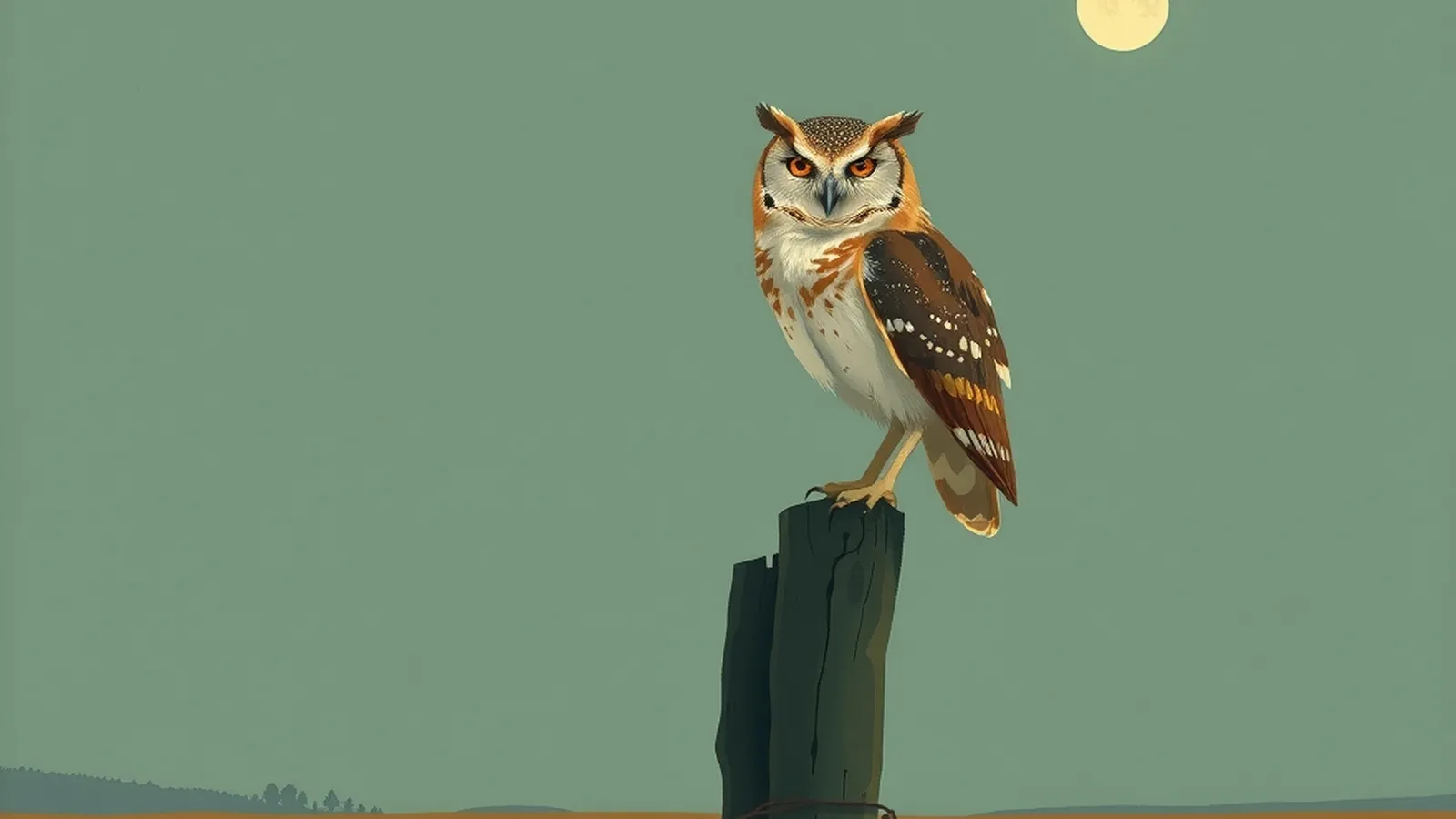
The owl is most widely seen as a symbol of wisdom, intuition and the ability to see what others miss. That meaning goes back to ancient Greece, where the owl was linked with Athena, goddess of wisdom. Today many people treat an owl sighting or an owl's call at night as a prompt to slow down and trust their inner sense of things. It's a belief and a reflection tool, not a forecast.
You'll find more signs like this in our guide to spiritual meanings of signs and symbols.
What people believe an owl means
Modern spiritual writing tends to connect the owl with a few related ideas:
- Wisdom and learning. This is the oldest and most consistent theme, inherited largely from Greek tradition.
- Intuition. Because owls move confidently through darkness, people often link them with knowing something before you can fully explain it.
- Seeing through confusion. An owl is sometimes read as encouragement to look honestly at a situation that feels murky.
- Quiet and patience. Owls often sit still for long stretches before acting, which many people take as a lesson in waiting for the right moment.
In some modern energy traditions, the owl is also connected with the third eye chakra, the center practitioners associate with insight and intuition. That pairing is a recent convention, not an ancient teaching, but it can be a helpful way to frame a reflection.
The owl in ancient Greece
The owl's reputation for wisdom comes mostly from Athens. The bird was closely associated with Athena, the city's patron goddess and the goddess of wisdom and strategy. Athenian silver coins carried an owl on one side, and the image became a kind of emblem of the city itself. Later European art kept the owl as a shorthand for learning, which is why owls still show up on library signs and graduation cards.
When owls are seen differently
Not every culture has viewed owls kindly. Some traditions have told stories of owls as messengers of misfortune, often because they're heard at night and rarely seen. It's worth knowing that those beliefs exist and treating them with respect, since they belong to real communities and histories.
That said, an owl doesn't bring harm. If you grew up hearing that an owl's call is a bad sign and it still makes you uneasy, that's understandable. It may help to remember that the bird is doing ordinary owl things: hunting, guarding a territory or calling to a mate.
Owls also hold meaning for many Indigenous nations, but those meanings are not one shared belief. They differ from nation to nation, and some are tied to teachings that aren't meant for outsiders. If you want to understand an owl's place in a specific nation's culture, learn from that community's own educators and cultural institutions rather than from generalized websites.
The natural side: how owls really work
The science behind owls explains a lot about why people find them mysterious.
- Night hunters. Many owl species hunt at night, though some are active at dawn and dusk, and a few hunt by day.
- Silent flight. Owls have specialized feathers that let them fly very quietly. The leading edge of the wing has a comb-like fringe, and the feather surfaces are soft, which together reduce the sound of air rushing over the wing. That lets them hear prey, and approach it, without giving themselves away.
- Listening as much as looking. Many owls rely heavily on hearing. Their facial discs help funnel sound toward their ears.
- Turning the head. Owls can't move their eyes much within their sockets, so they turn their heads instead, and they can turn them remarkably far.
So the owl's "quiet knowing" has a real basis: it's an animal built to notice small sounds in the dark.
How the owl connects to other signs
Owls belong to a group of birds that people read as messengers of perception. The hawk is the daytime counterpart, linked with a sharp, wide view from above, while the owl is about seeing up close in low light. The crow shares the owl's reputation for intelligence, though its symbolism leans toward cleverness and memory. And if you've found what you think is an owl feather, that page explains why it's best to photograph it and leave it in place.
A night-time listening practice
This works well before bed, ideally in a dim room or outdoors on a safe porch or balcony.
- Turn down the light. Sit somewhere comfortable with the lights low or off.
- Listen in rings. For one minute, notice sounds inside the room. Then sounds inside the building. Then sounds outside. Don't label them as good or bad.
- Turn the listening inward. Ask yourself one question you've been avoiding, and simply notice the first quiet response that comes, without arguing with it.
- Check it in daylight. Write the response down. The next morning, look at it with fresh eyes and decide what, if anything, you want to act on.
Intuition is most useful when it's tested against real information. Treat what comes up as a lead to explore, not a final answer. If you'd like more structured stillness, our meditation guides are a good place to start.
Journal prompts
- What do I already know about this situation that I haven't said out loud?
- Where in my life would patience serve me better than quick action?
- When have I trusted a quiet hunch and been glad I did? What made that hunch trustworthy?
- What would I notice if I listened more and spoke less this week?
Keeping the meaning grounded
An owl sighting is a gift of attention: these birds are often heard but rarely seen. You don't need to believe it was sent to you for it to be meaningful. Let it remind you to slow down, listen carefully and then make a thoughtful, practical choice.
For more ways to build a steady inner practice, explore the spiritual growth section.
Want a structured program to go deeper?
Reading is a start. Some people do better with a guided course they can follow day by day. This button opens a manifestation or meditation program from one of our advertising partners.
See the partner program →We may be paid when you click. The program shown can change. Read its terms before you buy anything. How this works
Frequently asked questions
What does it mean when you hear an owl at night?
Most owls are active at night, so hearing one usually means an owl is hunting or calling to a mate or neighbor nearby. In modern spiritual belief, many people take it as a gentle prompt to listen to their intuition. It is not a prediction of anything.
Is seeing an owl a bad omen?
No. Some cultures have told stories of owls as ill omens, and those beliefs deserve respect as part of their traditions, but an owl sighting doesn't cause or predict harm. In ancient Greece the owl was a symbol of wisdom, and that's the meaning most people reflect on today.
Why is the owl a symbol of wisdom?
The link goes back to ancient Greece, where the owl was associated with Athena, goddess of wisdom. Athens even put an owl on its coins. Later European art and writing carried that association forward.