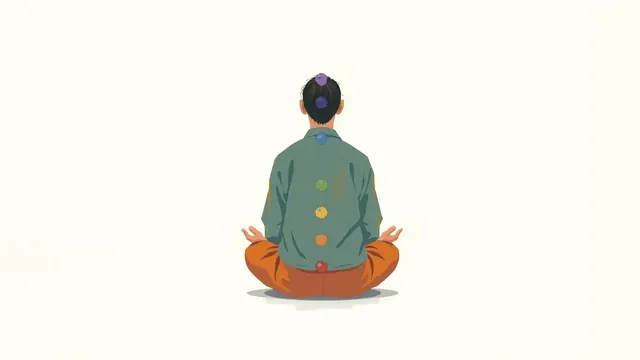
Root Chakra (Muladhara): Meaning and Grounding Practices
The root chakra, called Muladhara in Sanskrit, is the first of the seven chakras and sits at the base of the spine. In yogic and tantric belief it is the foundation of the whole system, tied to feeling safe, steady and supported in your body and your life. Its modern color is red, its element is earth and its seed mantra is LAM.
Like every chakra, the root is part of a spiritual framework, not a structure you could find on a scan. There is no scientific evidence that it exists physically. Many people still find it a helpful lens for one very human question: do I feel on solid ground right now? For an overview of all seven centers and where the system comes from, start with our guide to the chakras.
What Muladhara means
Mula means "root" and adhara means "support" or "base," so Muladhara is often translated as "root support." The name fits its role. In this tradition, every chakra above it is said to rest on it, the way a house rests on its foundation.
Traditional texts picture Muladhara as a lotus with four petals, often containing a square that symbolizes the earth element. Some tantric sources also describe it as the resting place of kundalini, a coiled energy said to lie dormant at the base of the spine. Details like petal colors, deities and symbols differ from one text and lineage to another, so you will see variations depending on where you look.
Root chakra at a glance
| Feature | Root chakra |
|---|---|
| Sanskrit name | Muladhara ("root support") |
| Location | Base of the spine, pelvic floor area |
| Modern color | Red |
| Element | Earth |
| Seed syllable | LAM |
| Traditional symbol | Four-petaled lotus with a square |
| Sense often linked | Smell |
| Core themes | Safety, stability, belonging, basic needs |
The red color comes from the modern Western rainbow scheme. Older texts used different colors and imagery, so treat red as a helpful memory aid rather than an ancient rule.
Themes of the root chakra
Modern teachers connect the root chakra to the most basic layer of life: shelter, food, money, routine and a sense of belonging to a family, group or place. It is less about big dreams and more about whether the floor feels solid under your feet.
Some modern writers also associate it with the legs, feet, bones and lower body. That is a symbolic link, not a medical one. If you have pain or other physical symptoms in those areas, see a doctor rather than treating it as a chakra issue.
Balanced, blocked or overactive
Practitioners describe the root chakra in three broad states. These are emotional and behavioral themes people reflect on, not diagnoses.
- Balanced: You can handle a change of plans without feeling the ground has dropped away. You keep up simple routines, trust that you can meet your needs, and feel at home in your body.
- Blocked or underactive: You might feel scattered, restless or like you're always waiting for something to go wrong. Practical tasks, like paying a bill or making a doctor's appointment, keep slipping.
- Overactive: Security turns into rigidity. You might cling to control, resist any change, hoard things or money out of fear, or find it hard to rest.
Almost everyone moves through all three at times, especially during a move, a breakup or a job change. If feelings of anxiety or insecurity are strong or don't ease, please talk to a doctor or licensed therapist. Our guide to signs of a blocked chakra covers how practitioners use the "blocked" metaphor across all seven centers, and why it should never replace real care.
Grounding practices for the root chakra
Root chakra work tends to be physical, simple and slow. The point is to feel the weight of your body and the support beneath it.
Feet-first breathing
- Stand or sit with both feet flat on the floor.
- As you breathe in slowly, notice the pressure of your heels, the balls of your feet and your toes.
- As you breathe out, imagine your exhale traveling down your legs and into the ground.
- Repeat for ten breaths, then notice whether your shoulders have dropped.
Walking with attention
Walking is one of the most natural grounding practices because every step meets the earth. Slow your pace, feel each heel land and roll forward, and let your attention rest on your feet instead of your thoughts. Our walking meditation guide explains the full practice, including how to do it in a hallway or small apartment.
Yoga poses
Common root-focused poses in modern yoga classes include mountain pose, warrior II, chair pose and child's pose. Hold each for a few slow breaths and focus on your contact with the floor. Stay within your comfort range, and check with a doctor or physical therapist first if you have an injury.
Chanting LAM
Sit tall, breathe in, and on the exhale chant "lam" with a long, low "mmm" at the end. Feel the vibration in your chest and lower body. Five to ten rounds is plenty. The sound gives a busy mind one simple thing to follow.
A grounding "basics audit"
This is where the root chakra meets everyday life. Pick one practical area that feels shaky, such as your sleep schedule, your grocery plan or a bill you've been avoiding, and do one concrete thing about it today. In this framework, a sorted-out sock drawer can be a more honest root chakra practice than an hour of visualizing red light.
Affirmations
Try short, believable statements and repeat them slowly:
- "I can take care of what is in front of me today."
- "My body is allowed to rest."
- "I have handled hard things before."
Root chakra journal prompts
Set a timer for ten minutes and pick one or two:
- What were the three most stabilizing things in my week, however small?
- Which routine, if I kept it for a month, would make me feel more settled?
- Where did I learn what "safe" looks like, and does that picture still fit me?
- What am I holding onto out of fear rather than need?
- Who are the people I could call at 2 a.m., and when did I last tell them they matter?
Read back what you wrote and circle one action you can take before the week ends.
How the root connects to the other chakras
The root rarely works alone in this system. The sacral chakra sits just above it, and practitioners often say pleasure and creativity flow more freely once you feel safe enough to enjoy them. At the far end, the crown chakra is its mirror: the root anchors you in the physical world while the crown points toward meaning, and many teachers say spiritual seeking goes better with both feet on the ground.
If you want a broader routine that moves through all seven centers, our chakra balancing guide offers breath, movement and journaling options you can combine with the grounding work above.
A grounded way to use this
The root chakra is a reminder that spiritual growth doesn't float above ordinary life. Feeling steady usually comes from plain things: sleep, food, a budget, people you trust and a body you check in with. Use the root chakra as a prompt to notice those foundations, then take one small, practical step to strengthen them.
Want a structured program to go deeper?
Reading is a start. Some people do better with a guided course they can follow day by day. This button opens a manifestation or meditation program from one of our advertising partners.
See the partner program →We may be paid when you click. The program shown can change. Read its terms before you buy anything. How this works
Frequently asked questions
What does the root chakra control?
In chakra belief, the root chakra is linked with themes of safety, stability and belonging. It doesn't control any body function in a medical sense, so physical symptoms are a reason to see a doctor.
What is the mantra for the root chakra?
The traditional seed syllable, or bija mantra, for the root chakra is LAM. People chant it softly or repeat it silently during meditation.
How do I know if my root chakra is blocked?
Practitioners use "blocked" as a metaphor for feeling unsettled, scattered or unsafe. Those feelings have many possible causes, so if they persist, talk to a doctor or licensed therapist.