The Crown Chakra (Sahasrara): Meaning, Awe and Staying Grounded

The crown chakra, called Sahasrara in Sanskrit, is the seventh and highest chakra. In yogic and tantric belief it sits at the top of the head, or just above it, and is linked with spiritual connection, meaning and a sense of belonging to something larger than yourself. In the modern system its color is violet or white.
The crown is the most abstract chakra, and it's easy to talk about it in lofty terms. This guide keeps it practical. As with every chakra, there is no scientific evidence that Sahasrara exists as a physical structure; it is a symbol within a spiritual tradition. For context on the whole system, see our overview of the seven chakras.
What does Sahasrara mean?
Sahasrara means "thousand-petaled." The thousand petals aren't meant as a literal count. In Sanskrit, a thousand often signals something beyond counting, so the image points to a center that is limitless and complete. In many tantric texts, this is where the journey of meditation reaches its goal: the union of individual awareness with the divine or with pure consciousness, described in different ways by different schools.
Some traditions don't treat the crown as a chakra in the same sense as the other six. They describe it as the culmination that sits above the system rather than one more stop along the spine.
Crown chakra at a glance
| Feature | Traditional or common association |
|---|---|
| Location | Top of the head or just above it |
| Color (modern) | Violet, white or gold |
| Element | Often described as beyond the elements, or as pure consciousness |
| Seed mantra | Traditions vary: often silence, sometimes OM |
| Lotus petals | 1,000, a symbol of the limitless |
| Core themes | Meaning, awe, humility, connection, presence |
Some modern teachers associate the crown with the brain or the pineal gland. That is a modern spiritual interpretation, not medical fact.
The themes of the crown chakra
The crown is less about doing and more about perspective. Its themes include:
- Meaning. A sense that your life fits into something worth caring about, whether you call that God, nature, humanity or simply what matters most to you.
- Awe. The feeling you get looking at the night sky, the ocean or a newborn.
- Humility. Knowing you are part of something bigger and don't need to have every answer.
- Presence. Moments of quiet, open awareness where nothing needs fixing.
- Openness. Willingness to hold questions about life without rushing to close them.
You don't need to be religious to relate to these. Many secular people describe crown chakra themes as their values and their capacity for wonder.
Balanced, blocked and overactive: what practitioners describe
These are emotional and behavioral patterns used as a reflection tool. They are not symptoms or diagnoses.
| State | What practitioners describe |
|---|---|
| Balanced | A felt sense of meaning, openness to big questions, curiosity about other views, peace with not knowing everything. |
| Blocked or underactive | Feeling that nothing matters, cynicism, going through the motions, rigid certainty that leaves no room for wonder. |
| Overactive | Living "in the clouds," neglecting daily responsibilities, using spiritual ideas to avoid hard feelings, feeling superior for being "awakened." |
That overactive pattern has a name in psychology circles: spiritual bypassing, which means using spiritual language to skip over real emotions or problems. It's one reason many teachers say crown work only makes sense alongside steady, grounded habits.
A persistent sense that nothing matters can be a sign of depression. If that feels familiar, please talk to a doctor or licensed therapist. The same goes for feeling detached from your body or surroundings. Headaches or other physical symptoms belong with a doctor, not a chakra practice.
Grounding first: the root and crown pairing
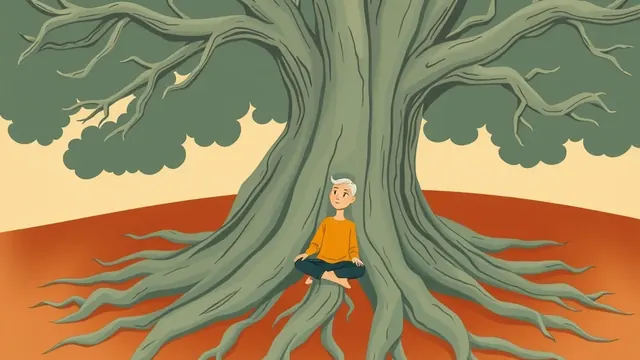
Practitioners often describe the crown and the root chakra as two ends of one line. The root keeps you anchored in your body, your home and your bills; the crown opens you to meaning. Many teachers recommend tending the root before reaching for the crown, so spiritual openness doesn't come at the cost of everyday stability. Reading about one usually makes the other clearer.
Practices for the crown chakra
The crown suits quiet, open-ended practices. Any of these can also fit into a wider chakra balancing routine.
Silent sitting
Sit comfortably for five to ten minutes with no technique at all. No mantra, no counting. Let thoughts come and go. When you notice you are lost in thinking, simply notice, and rest again. Some traditions say the crown's "mantra" is this silence.
An awe walk
Take a slow walk with one instruction: look for something that surprises you. A sky color, a tree's size, a stranger's kindness. Pause each time and let the feeling land for a breath or two.
Crown visualization
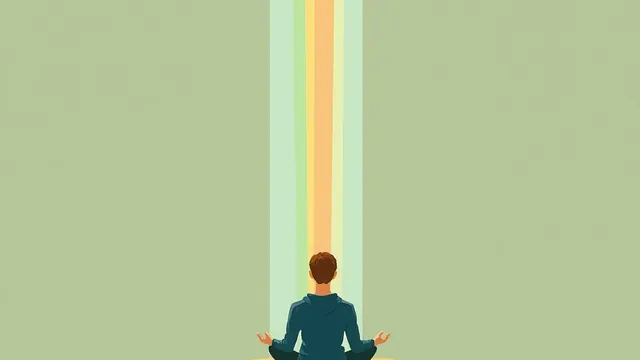
Sit upright. Picture a soft violet or white light resting at the top of your head. Imagine it widening gently with each breath. Then, before you finish, picture roots running from the base of your spine into the floor. Ending at the root is a common way to stay grounded.
Reflection on values
Write down three things you'd want your life to stand for. Then pick one small action this week that matches one of them. Crown work becomes real when meaning shapes what you actually do.
Corpse pose
The yoga pose savasana, lying flat in stillness, is a classic choice for this chakra. Even five minutes at the end of the day can serve as a crown practice.
A short crown chakra journal
- When did I last feel awe? What was I doing?
- What gives my life a sense of meaning right now, even in a small way?
- Where might I be using "everything happens for a reason" to avoid a feeling?
- What big question am I comfortable leaving open for now?
Where to go from here
The crown sits just above the third eye chakra, and practitioners see the two as close partners: insight at the brow, connection at the crown. To move through all seven centers in one session, follow our guided chakra meditation, a natural way to approach the crown gradually instead of jumping straight to it.
People exploring this chakra often wonder whether what they're experiencing is a spiritual awakening. Our guide to awakening signs looks at those experiences with a grounded eye, including when to reach out for support.
The grounded takeaway
The crown chakra is the tradition's symbol for meaning and connection. You don't reach it by chasing peak experiences or paying for "activations." You tend it through quiet moments, attention to awe and choices that reflect your values, all while keeping your feet firmly on the ground.
Want a structured program to go deeper?
Reading is a start. Some people do better with a guided course they can follow day by day. This button opens a manifestation or meditation program from one of our advertising partners.
See the partner program →We may be paid when you click. The program shown can change. Read its terms before you buy anything. How this works
Frequently asked questions
What color is the crown chakra?
In the modern system the crown chakra is violet, and many teachers also use white or gold. Traditional texts describe it with brilliant, many-colored or white imagery rather than a single rainbow color.
What is the mantra for the crown chakra?
Traditions vary. Some practitioners use OM, while others say the crown is beyond sound and practice it in silence. Both approaches are common today.
What happens when your crown chakra opens?
Practitioners describe moments of awe, peace or deep connection. These experiences vary widely. If you feel detached from reality, disoriented or overwhelmed, talk to a doctor or licensed therapist.