Citrine Meaning: The Golden Stone of Confidence (and Why Most of It Is Heated)
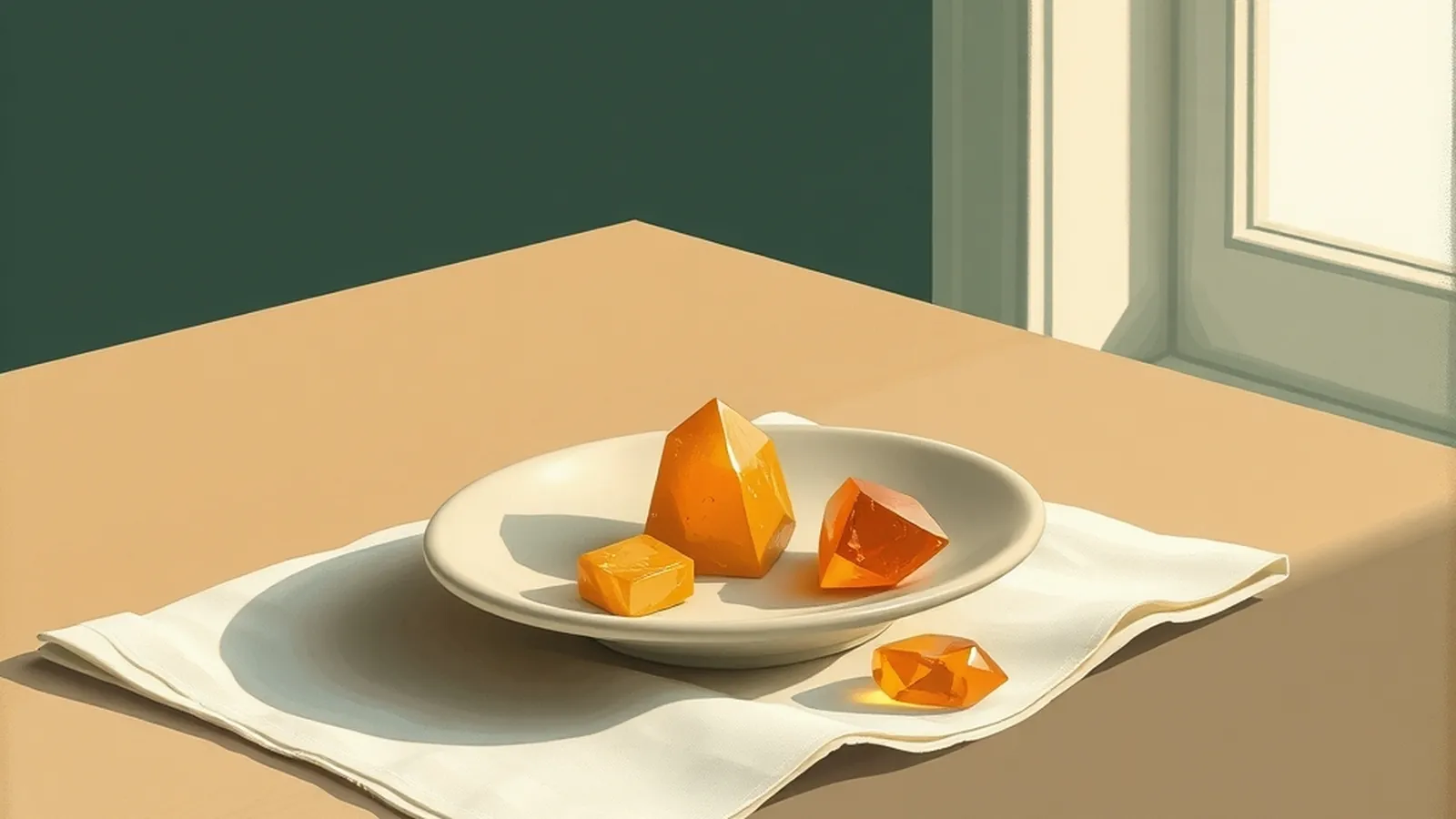
Citrine is yellow-to-orange quartz, and in modern crystal tradition it's associated with confidence, optimism and abundance, which is why it's often called a "money stone." Natural citrine is relatively rare; much of what's sold as citrine is amethyst that has been heat-treated to turn it golden. There's no evidence citrine brings money or success, but it can be a cheerful reminder to act on your goals.
Citrine is one of the eleven stones in our crystal meanings guide. This page covers what citrine really is, how to tell natural from heated stones, what people believe about it and how to use it in a grounded way.
What citrine is
Citrine is a variety of quartz, silicon dioxide, with a Mohs hardness of 7. Its color ranges from pale lemon to honey to deep orange-brown. The name comes from the French word for lemon, citron, a nod to its color. Citrine is also one of the modern birthstones for November.
Natural citrine is relatively uncommon. Much of the citrine on the market is amethyst that has been heated, which changes its color to yellow, orange or reddish-brown. Heat treatment is a long-standing practice in the gem trade and isn't harmful, but honest sellers disclose it.
Natural vs heat-treated citrine
You don't need a lab to make a reasonable guess. These are general patterns, not guarantees.
| Feature | Natural citrine | Heat-treated amethyst |
|---|---|---|
| Typical color | Pale yellow to soft honey, fairly even | Deeper orange, burnt orange or reddish-brown |
| Clusters and geodes | Rarely sold as bright clusters | Common; often white or clear bases with dark orange tips |
| Price | Usually higher for good color | Often inexpensive and abundant |
| Labeling | May be sold as "natural citrine" with origin details | Sometimes labeled "heated" or "baked," often not labeled at all |
If a bright orange citrine cluster is cheap and plentiful, it's almost certainly heated amethyst. That doesn't make it a bad focus object. It just means you should pay amethyst prices for it, not natural citrine prices.
Traditional and modern associations
The ideas below belong to modern crystal culture; treat them as beliefs rather than proven effects.
- Confidence and personal power. Its sunny color links it with self-assurance.
- Optimism and warmth. People keep it as a mood-lifting decoration.
- Abundance and prosperity. Modern sellers often call it the "merchant's stone" and suggest keeping it near a cash register or wallet.
- Motivation. It's associated with starting projects and following through.
In the modern chakra system citrine is paired with the solar plexus chakra, which is linked with confidence and willpower and usually shown as yellow. The solar plexus chakra guide explains those themes. Popular astrology lists also link it with various sun signs, though those lists differ from source to source.
What the evidence says
There's no scientific evidence that citrine or any crystal attracts wealth, success or luck, or has any healing or energetic effect. Small experiments comparing real crystals with convincing fakes found people reported similar feelings with both. Whatever confidence you feel with citrine in your pocket comes from you, and that's good news, because it means you can build it on purpose.
Citrine and money: a grounded approach
Citrine is heavily marketed for money manifestation, so it's worth being direct. A stone can't increase your income. What it can do is act as a visible cue for the practical habits that actually affect your finances. Our guide to manifesting money covers that approach in detail: clarity about what you want, budgeting, building skills, applying for roles and asking for raises.
Be especially careful with anyone selling expensive citrine "wealth kits," money grids or courses that promise financial results. Our guide to red flags explains how to spot those promises, and our guide to choosing a program covers what to ask before you pay for anything.
How people use citrine
- Wallet or work bag. A small tumbled piece can remind you to check your spending before a purchase.
- Home office. A point on your desk can serve as a cue for the one task that moves your work forward.
- Before hard conversations. Some people hold citrine before negotiating, pitching or asking for something, as a short ritual to steady themselves.
- Morning intention. Pair it with a confidence affirmation as part of a brief start-of-day routine.
A short practice: the Friday citrine check-in
This weekly ten-minute practice ties citrine's traditional meaning to something you can measure.
- Every Friday, sit with your citrine and a notebook.
- Write down one money action you took this week, no matter how small: tracking spending, updating a resume, cancelling an unused subscription, researching a course at a community college.
- Write one thing you did that took confidence, even if it didn't go perfectly.
- Choose one money action and one confidence action for next week. Keep them small and specific.
- Put the stone on top of the page until next Friday.
Over a few months, the notebook becomes a record of real steps, which is far more useful than any stone on its own.
Journal prompts
- Where in my life am I waiting to feel confident before I act?
- What did I learn about money growing up, and which of those beliefs do I still want to keep?
- What is one skill that would make me more valuable at work, and what's the first step to learning it?
Caring for citrine
- Sunlight: long, direct sun can fade citrine, so keep it off sunny windowsills. This is a little ironic for the "sunshine stone," but it's true of colored quartz in general.
- Water: a quick rinse in lukewarm water and a soft dry is fine. Avoid harsh chemicals and sudden heat.
- Never ingest: don't put citrine in drinking water or make "elixirs," and keep small stones away from children and pets.
Our guide on how to cleanse crystals explains which cleansing rituals are safe for colored stones.
Stones that pair with citrine
- Tiger's eye shares citrine's golden color and its traditional link with confidence and prosperity, with an added sense of steadiness.
- Carnelian is the orange stone of courage and creativity, a natural partner when you want motivation to start something.
- Clear quartz is citrine's colorless relative and is often paired with it to add clarity to a confident intention.
New to working with stones? Our Crystals for Beginners guide covers the basics.
Want a structured program to go deeper?
Reading is a start. Some people do better with a guided course they can follow day by day. This button opens a manifestation or meditation program from one of our advertising partners.
See the partner program →We may be paid when you click. The program shown can change. Read its terms before you buy anything. How this works
Frequently asked questions
Does citrine attract money?
There's no evidence that citrine or any crystal attracts money. In modern crystal tradition it's associated with abundance and confidence, and some people use it as a reminder to take practical steps like budgeting, building skills or asking for a raise.
How can you tell if citrine is real or heated amethyst?
Natural citrine is usually a pale, even yellow to honey color. Heat-treated amethyst tends to be a deeper orange or reddish-brown, and clusters often show white bases with darker orange tips. A gemologist can confirm a valuable piece.
Can citrine go in the sun?
Long, direct sunlight can fade citrine, as it can other colored quartz. Keep it away from sunny windowsills and store it out of strong light.