Carnelian Meaning: The Orange Stone of Creativity and Courage
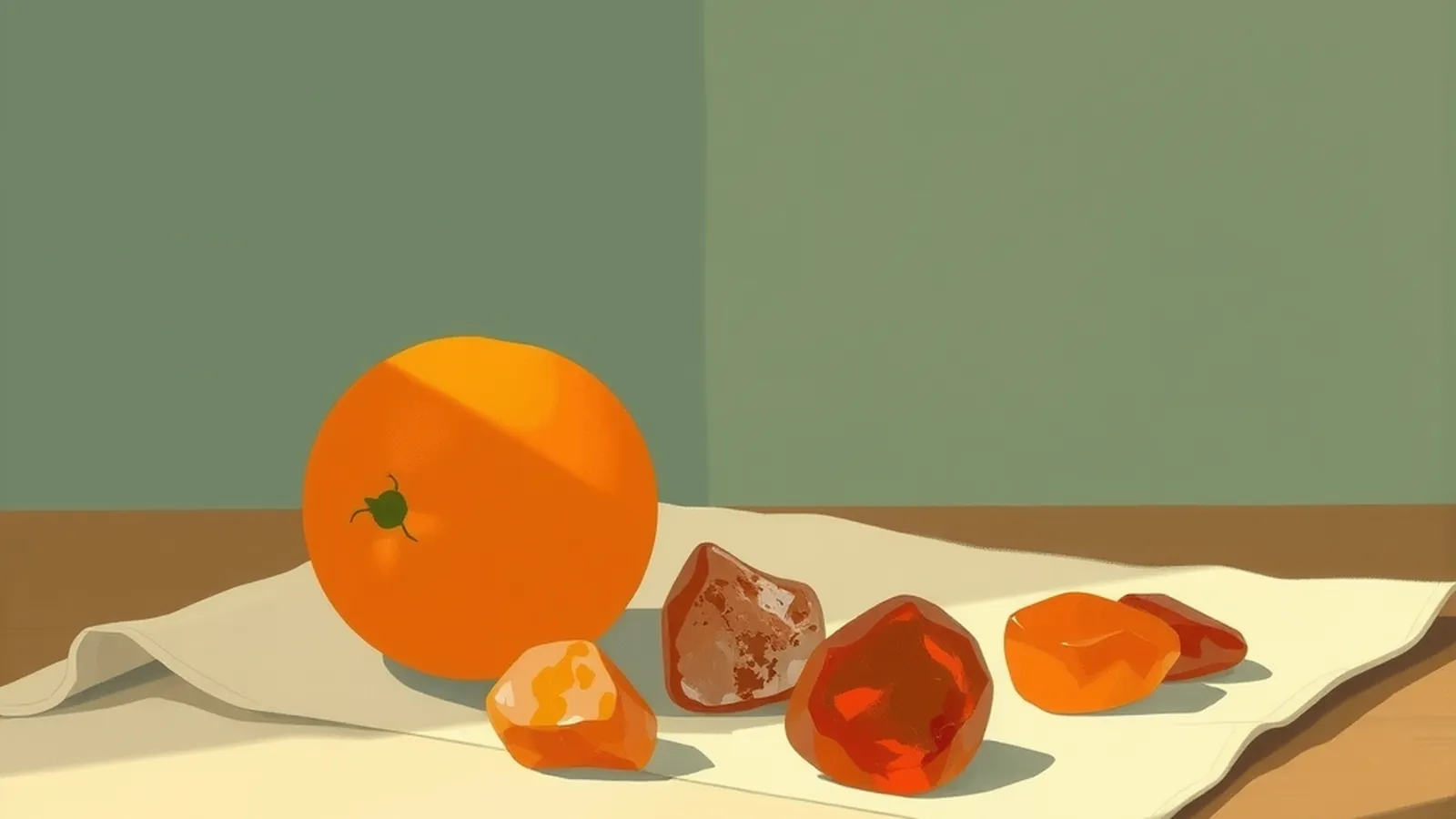
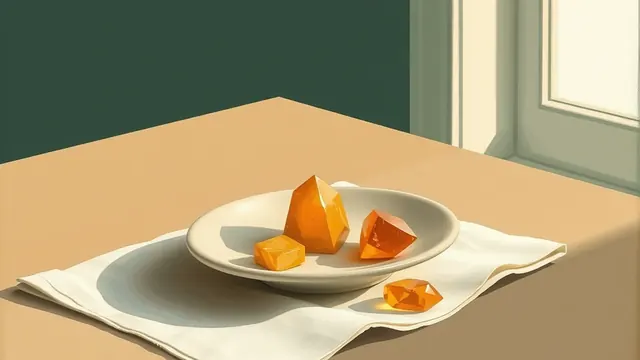
Carnelian is an orange-to-red variety of chalcedony, a form of quartz made of crystals too small to see. In modern crystal belief it's associated with creativity, courage, motivation and warmth, and it's often linked with the sacral chakra. There's no scientific evidence that carnelian has energetic or healing effects, but its bright color makes it a popular reminder to start the thing you keep putting off.
This page is part of our crystal meanings guide. If you're new to stones in general, crystals for beginners covers the basics of choosing one and using it with intention.
What carnelian actually is
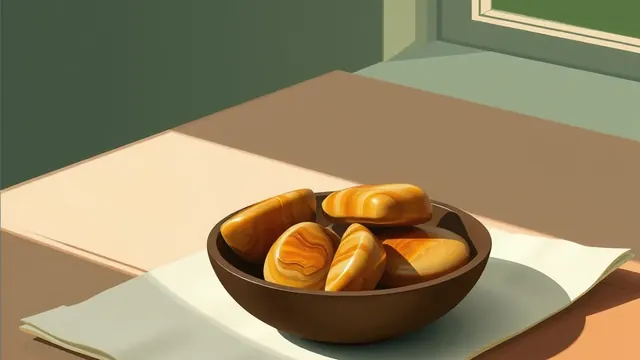
Carnelian is chalcedony, a microcrystalline quartz. Instead of growing as one large crystal like clear quartz, chalcedony is made of countless tiny quartz fibers packed together, which gives it a smooth, waxy look. Its orange and red tones come from iron oxides. Like other chalcedony, it's fairly hard, around 6.5 to 7 on the Mohs scale, so it holds a polish well and resists everyday scratches.
Carnelian has a long human history. It was carved into beads, seals and ornaments in many ancient cultures, including Egypt, Mesopotamia and the Indus Valley. Roman seal rings were often cut from carnelian, partly because hot wax doesn't stick to it easily. That practical history is real; the metaphysical meanings came much later.
Not every orange stone sold as carnelian is natural. Some is dyed agate, and heat treatment is commonly used to deepen the red tones of natural chalcedony.
Carnelian meaning in crystal belief
In modern crystal practice, carnelian is one of the classic "action" stones. Practitioners associate it with:
- Creativity: starting projects, playing, making things without overthinking.
- Courage: speaking up, trying something new, tolerating the discomfort of being a beginner.
- Motivation: shaking off procrastination and building momentum.
- Warmth and vitality: a sense of being awake and engaged with life.
These are beliefs within crystal tradition, not proven effects. Science hasn't found any healing or energetic effect from carnelian or any other crystal. When small experiments have compared real stones with convincing fakes, people reported similar feelings either way, which suggests expectation and ritual play the main role. That doesn't make the ritual worthless. It just means the action you take is the part that changes things.
Chakra and zodiac associations
In the modern Western chakra system, carnelian is most often linked with the sacral chakra, the center associated with creativity, pleasure and emotional flow. Its orange color matches the color modern teachers assign to that chakra. Some lists also connect carnelian with the root or solar plexus chakras, and with signs like Leo or Virgo. These pairings are modern conventions and vary between sources.
How people use carnelian
Because carnelian is tied to doing rather than just feeling, it works best when paired with a specific action:
- On a creative workspace. Set it beside your sketchbook, keyboard or instrument as a cue to begin.
- In a pocket on a hard day. Some people carry it into a presentation or difficult conversation as a reminder to speak plainly.
- As a meditation focus. Hold it during a few minutes of quiet breathing before starting a task.
- In jewelry. It's durable enough for rings and bracelets.
As our beginners' guide puts it, the crystal is the reminder and the action is the practice. If you choose carnelian for creativity, block out time on your calendar to create.
A 10-minute "start" practice
Carnelian's reputation for momentum makes it a good fit for a simple warm-up ritual:
- Hold the stone and name one creative thing you've been avoiding, in a single sentence.
- Take three slow breaths and notice where you feel resistance in your body.
- Set a timer for 10 minutes.
- Work on the smallest possible version of the task: one paragraph, one sketch, eight bars of music.
- When the timer ends, put the stone down and write one line about how it went.
The goal isn't a finished product. It's proving to yourself that starting is possible.
Care and safety
- Water: A quick rinse with plain water and a soft cloth is fine for natural carnelian. Avoid long soaks, especially with dyed stones, which may bleed color.
- Sun: Prolonged strong sunlight can affect the color of some treated or dyed stones, so display carnelian out of harsh direct sun.
- Salt and chemicals: Avoid harsh cleaners. If you use salt for cleansing, keep the stone in a dish set beside or on top of the salt rather than buried in it.
- Never ingest: Don't make "gem elixirs" or put stones in drinking water.
- Small stones: Keep tumbled pieces away from young children and pets, since they're a choking hazard.
See how to cleanse crystals for a full table of methods and which stones each one suits.
Buying tips
- Look at the color pattern. Natural carnelian tends to have soft, cloudy color. Dyed agate often shows intense, uniform orange, or dye concentrated along bands and cracks.
- Ask about treatment. Heat treatment is common and not a problem in itself, but a trustworthy seller will disclose it.
- Be wary of very cheap, very bright stones. They're often dyed.
- Ask where it was mined. Supply chains for tumbled stones can be hard to trace, so a seller who knows the origin is a good sign.
- Skip big promises. A seller claiming a stone will boost your income or fix your health is overselling; our guide to red flags covers similar warning signs.
Related stones
Citrine is carnelian's closest companion in crystal tradition: both are warm-toned quartz linked with confidence and getting things done. Tiger's eye shares carnelian's reputation for courage and steady willpower, so the two are often paired. And rose quartz offers a softer counterpart, balancing carnelian's push toward action with an emphasis on kindness toward yourself.
Journal prompts
- What would I create this month if I didn't need it to be good?
- Where do I need a little more courage, and what's the first small step?
- What drains my motivation, and what restores it?
- When did I last feel fully absorbed in making something?
Want a structured program to go deeper?
Reading is a start. Some people do better with a guided course they can follow day by day. This button opens a manifestation or meditation program from one of our advertising partners.
See the partner program →We may be paid when you click. The program shown can change. Read its terms before you buy anything. How this works
Frequently asked questions
What is carnelian good for spiritually?
In crystal belief, carnelian is linked with creativity, courage, motivation and vitality. People use it as a reminder to take action on a creative goal; there's no evidence the stone itself changes energy or ability.
How can you tell if carnelian is real?
Natural carnelian usually has soft, cloudy color that shifts gradually. Very bright, even orange with color concentrated in bands or cracks often signals dyed agate. Ask the seller directly whether a stone is dyed or heat-treated.
Can carnelian go in water?
A quick rinse with plain water is generally fine for carnelian. Skip long soaks for dyed pieces, which can lose color, and never put any stone in water you plan to drink.