Amethyst Meaning: The "Sober" Stone of Calm and Clear Thinking
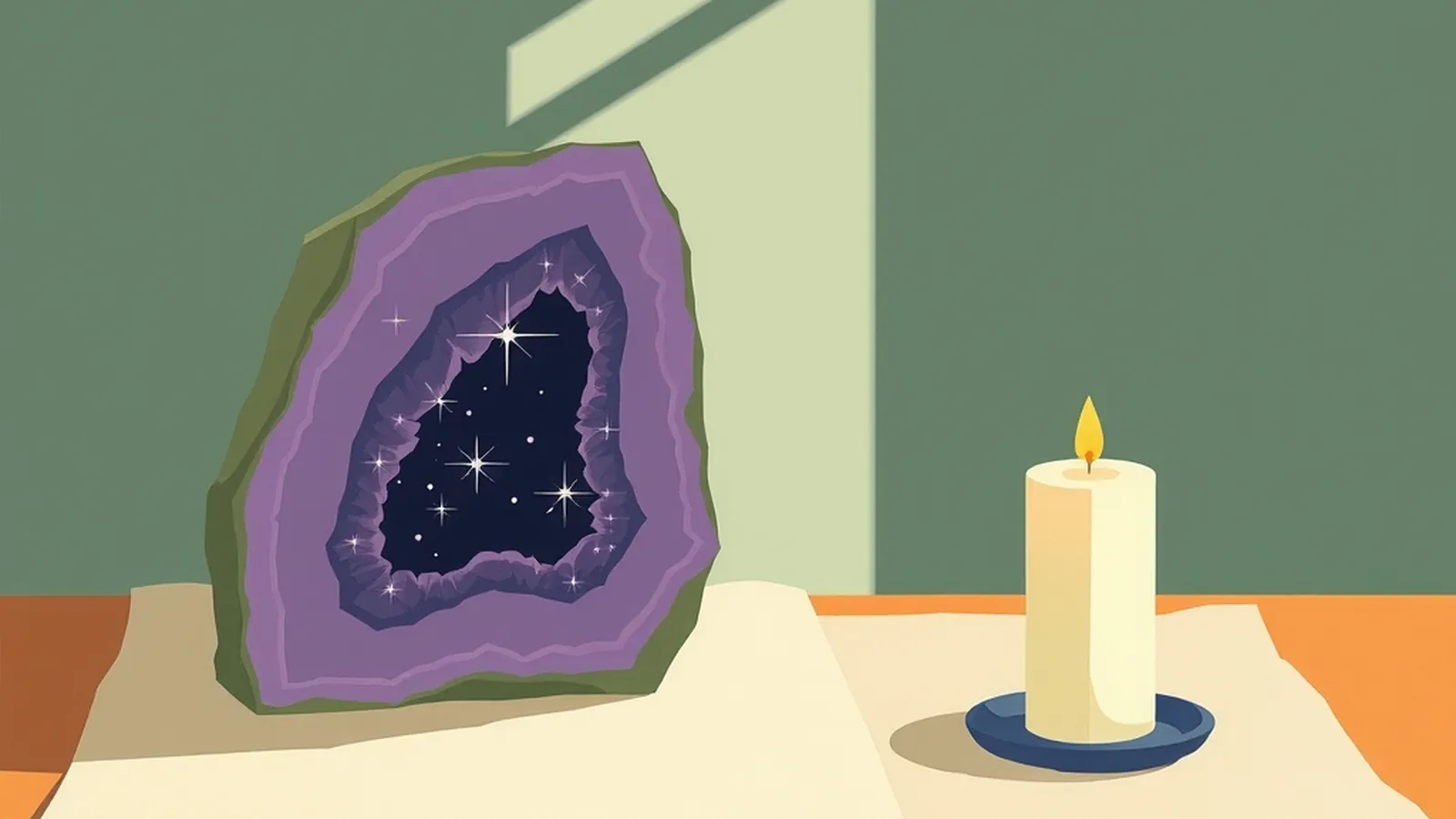
Amethyst is purple quartz, and in modern crystal tradition it's associated with calm, clear thinking and intuition. Its name comes from the ancient Greek amethystos, meaning "not intoxicated," and many people today use it as a reminder to keep a clear, steady mind. There's no scientific evidence that amethyst changes your mood or energy, but it can be a lovely focus object for that intention.
Amethyst is one of the stones in our crystal meanings guide, which covers eleven popular stones side by side. This page goes deeper on what amethyst is, what people believe about it and how to use and care for it.
What amethyst is
Amethyst is a variety of quartz, the same mineral family as clear quartz, rose quartz and citrine. Quartz is silicon dioxide, and it rates 7 on the Mohs hardness scale, which makes amethyst tough enough for everyday handling and jewelry.
Its purple color is linked to traces of iron in the crystal combined with natural irradiation over long periods underground. That color isn't permanent under all conditions: long exposure to direct sunlight can fade it. Amethyst is also the modern birthstone for February.
The name and the legend
The word amethystos means "not intoxicated" or "not drunk" in Greek. A long-standing legend says people in the ancient world believed the stone could keep a drinker sober, and some carved cups from it. Whatever people believed back then, the story has shaped the stone's modern meaning: amethyst is now treated as a symbol of a sober, clear and uncluttered mind.
That's a helpful frame, because it turns amethyst into a question rather than a promise. What clouds your thinking these days? For many people it isn't wine at all. It's endless scrolling, worry loops, overwork or saying yes to too much.
Traditional and modern associations
These come from modern crystal practice and are beliefs, not established effects.
- Calm and peace of mind. Amethyst is one of the most popular stones for a bedside table or meditation corner.
- Clear thinking. Practitioners link it with sound judgment and seeing a situation as it is.
- Intuition and spiritual connection. It's often described as a "spiritual" stone that supports reflection and prayer.
- Moderation. Following its name, some people use it as a reminder around habits they want to cut back on.
In the modern chakra system, amethyst is usually paired with the crown chakra and sometimes the third eye, mostly because of its violet color. These pairings are recent conventions. If you're curious about that connection, our guide to the crown chakra explains its themes of meaning and awe, and why teachers stress staying grounded while working with it. Amethyst is also commonly linked with the zodiac signs Pisces and Aquarius in popular astrology.
What the evidence says
There's no scientific evidence that amethyst, or any crystal, has healing or energetic effects. Small experiments in which people held either real crystals or convincing fakes found that both groups reported similar feelings, which suggests expectation and attention do the work. That doesn't make your experience of calm with amethyst fake. It just means the calm is coming from you, from the pause and the intention, and you can bring it with you anywhere.
How people use amethyst
- A clear-head checkpoint. Keep a small tumbled amethyst near your phone charger or laptop. When you reach for it, pause and ask, "Am I choosing this, or drifting into it?"
- Evening wind-down. Place a cluster on a nightstand as a cue to put screens away and start winding down.
- Meditation focus. Rest a point or tumbled stone in your open palm and let its weight anchor your attention during a few minutes of quiet sitting.
- Jewelry. Because it's hard and durable, amethyst works well in rings and pendants worn as an all-day reminder.
A short practice: the "not intoxicated" pause
This five-minute practice borrows directly from amethyst's name.
- Hold your amethyst and take three slow breaths.
- Ask yourself: "What has been clouding my mind this week?" Name one thing honestly, such as late-night news, a resentment you keep replaying or a habit that leaves you foggy.
- Turn the stone over and notice its color zones. Let that small act of looking closely stand for seeing your situation clearly.
- Choose one concrete limit for the next three days, such as no phone in the bedroom or a ten-minute cap on a certain app.
- Set the stone where you'll see it when that habit usually starts.
The stone is the reminder. The limit you set, and keep, is the practice.
Journal prompts
- What does a "clear head" feel like for me, and when did I last have one?
- Which habit leaves me feeling foggy, and what need is it trying to meet?
- If I treated my attention as precious, what would I stop giving it to?
Caring for amethyst
- Sunlight: keep it out of sunny windows and off outdoor altars for long periods, since its purple can fade.
- Water: a quick rinse in lukewarm water and a soft cloth dry is fine. Avoid harsh cleaners and sudden temperature changes.
- Salt: if you use salt in a ritual, set the stone in a small dish on top of the salt rather than burying it, which protects polished surfaces and any jewelry metal.
- Never ingest: don't place amethyst in drinking water or make "gem elixirs." Keep small stones away from young children and pets.
For a full rundown of cleansing methods and which stones they're unsafe for, see how to cleanse crystals.
Buying tips
- Look for natural variation. Real amethyst often shows uneven color zoning, with deeper purple at the tips. Perfectly even color and round bubbles can suggest glass.
- Know the treatments. Amethyst is sometimes heated, which can turn it yellow or orange, and that heated material is often sold as citrine.
- Ask about origin. A good seller can tell you where a piece was mined. Supply chains for crystals are often unclear, so it's worth asking.
- Skip the promises. Be cautious of listings that claim amethyst cures insomnia or addiction. Our guide to red flags explains why big promises are a warning sign.
Stones that pair with amethyst
- Clear quartz is amethyst's colorless sibling, the same mineral without the purple, and is often used alongside it for clarity.
- Selenite shares amethyst's association with peace and the crown chakra, though it's far softer and needs gentler care.
- Lapis lazuli is another stone tied to wisdom and inner insight, which makes it a natural companion for reflective practice.
If you're new to all this, our Crystals for Beginners guide covers choosing a first stone and using it with intention.
Want a structured program to go deeper?
Reading is a start. Some people do better with a guided course they can follow day by day. This button opens a manifestation or meditation program from one of our advertising partners.
See the partner program →We may be paid when you click. The program shown can change. Read its terms before you buy anything. How this works
Frequently asked questions
What is amethyst good for spiritually?
In modern crystal tradition, amethyst is associated with calm, clear thinking, intuition and a peaceful mind. These are beliefs, not proven effects; many people simply use it as a reminder to slow down.
Can amethyst go in water or sunlight?
A quick rinse in plain water and a gentle dry is fine for this hard quartz. Long, direct sunlight can fade its purple color, so keep it out of sunny windowsills.
How can you tell if amethyst is real?
Natural amethyst usually has uneven color zones and small inclusions, while glass often looks too uniform and may contain round bubbles. For a valuable piece, ask a qualified gemologist.