Lapis Lazuli Meaning: The Ancient Blue Stone of Truth
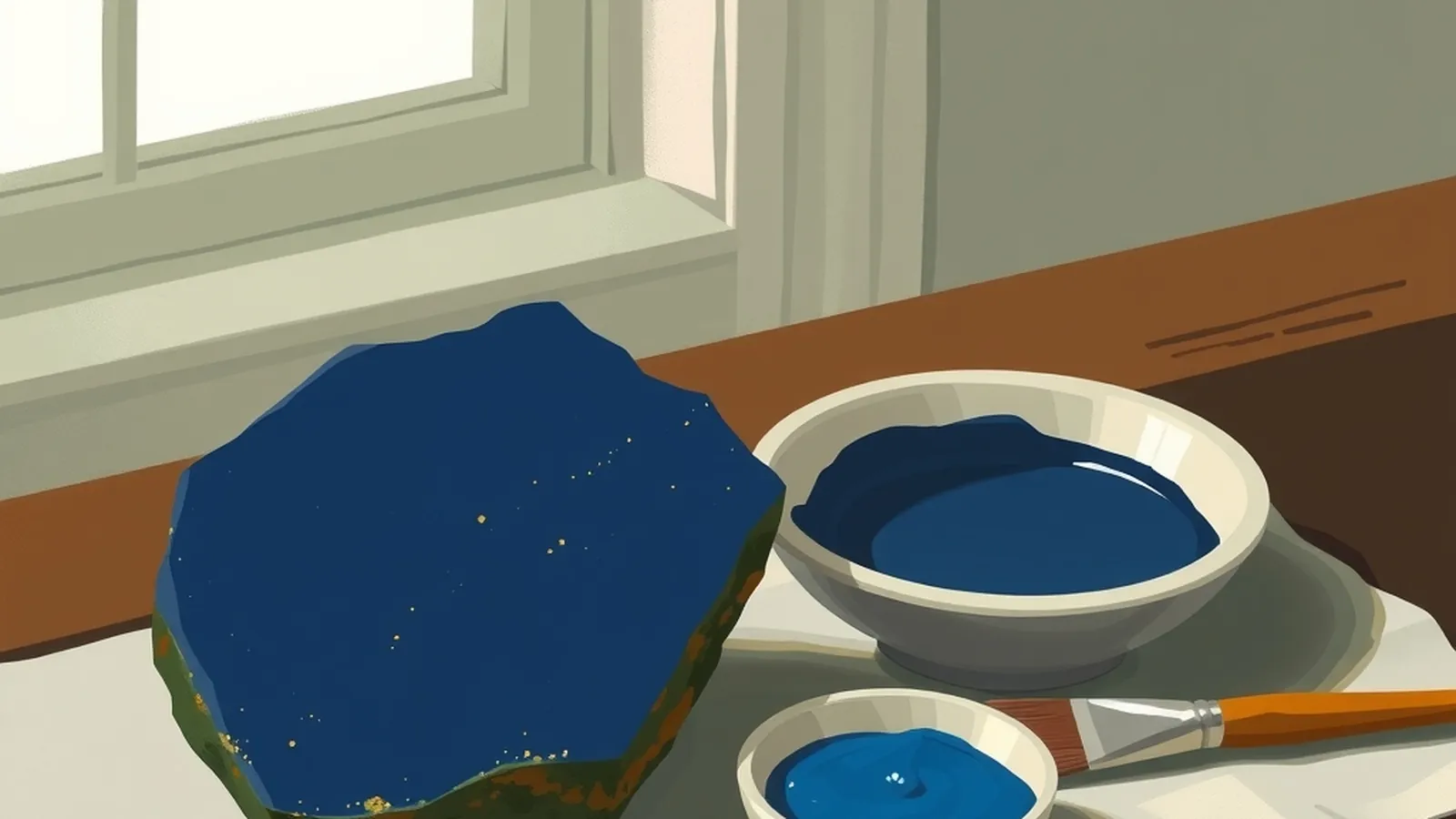
Lapis lazuli is a deep blue rock made mostly of the mineral lazurite, often flecked with gold-colored pyrite. In crystal belief it's associated with truth, wisdom, self-expression and inner insight, and it's commonly linked with the throat chakra. There's no scientific evidence that lapis has energetic or healing effects, but few stones carry as much real human history.
For more stones, return to our crystal meanings overview. If you're new to working with stones, crystals for beginners covers the essentials.
What lapis lazuli actually is
Lapis lazuli isn't a single mineral. It's a rock, a natural mix of several minerals. Its intense blue comes mainly from lazurite. The glittering gold flecks are pyrite, and white streaks or patches are usually calcite. The proportions of each affect both its look and its value: the most prized lapis is a deep, even blue with fine pyrite and little calcite.
On the Mohs scale, lapis rates about 5 to 5.5, softer than quartz. It's also somewhat porous, which matters for care. Water, chemicals and even skin oils over time can dull its surface.
A stone with a long history
Lapis has been mined in the mountains of what is now Afghanistan for thousands of years, and those deposits are still among the most famous sources today. From there it traveled along ancient trade routes to Egypt, Mesopotamia and beyond. It was carved into beads, seals and amulets, and Tutankhamun's burial mask includes lapis inlays.
Its most surprising use was in art. For centuries, lapis was ground into a pigment called ultramarine, a brilliant blue that was extremely expensive in medieval and Renaissance Europe. Painters often saved it for the most important parts of a work. A synthetic version was developed in the 1800s, which is why ultramarine paint is affordable today.
That history is factual. The metaphysical meanings people attach to lapis today come mostly from the modern crystal movement, sometimes drawing loosely on its ancient prestige.
Lapis lazuli meaning in crystal belief
In modern crystal practice, lapis is associated with:
- Truth and honesty: saying what you mean, and being honest with yourself.
- Wisdom: learning, study and seeing the bigger picture.
- Self-expression: finding words for what you feel or believe.
- Insight: reflection, dreams and intuition.
These are beliefs, not tested effects. There's no scientific evidence that crystals have healing or energetic properties. Small experiments comparing real crystals with convincing fakes have found people describing similar feelings with both, which points to expectation and focus as the real ingredients. That's worth knowing, and it can free you to use the stone simply as a meaningful reminder.
Chakra and zodiac associations
In the modern Western chakra system, lapis is most often linked with the throat chakra, the center associated with communication and honest expression. Its blue color matches the color modern teachers assign to that chakra. Some lists also link it with the third eye chakra because of its insight associations, and with signs like Sagittarius or Libra. These pairings are modern conventions that differ between sources.
How people use lapis lazuli
- Before a hard conversation. Holding the stone for a minute can serve as a cue to speak clearly and kindly.
- On a study or writing desk. Its link with wisdom makes it a popular desk stone for students and writers.
- In meditation. Some people rest it in an open palm while quietly repeating a word or phrase, a simple form of mantra meditation.
- In jewelry. Lapis is common in pendants and earrings. Rings and bracelets take more knocks, so they scratch faster.
A "say it plainly" practice
Because of its link with honest expression, lapis lends itself to a short writing exercise:
- Hold the stone and think of something you've wanted to say to someone but haven't.
- Write it out as bluntly as you like. This version is just for you.
- Read it back and circle the one sentence that matters most.
- Rewrite that sentence in a way that's honest, specific and kind.
- Decide whether, when and how you want to say it in real life.
The stone doesn't give you courage or the right words. The practice of drafting and choosing does that work.
Care and safety
Lapis needs more care than most popular stones.
- No soaking. Don't leave lapis in water. Wipe it with a dry or barely damp soft cloth and dry it right away.
- No chemicals. Avoid household cleaners, perfume, lotions and ultrasonic jewelry cleaners. Put lapis jewelry on after you've applied products.
- No salt. Salt can scratch and damage soft, porous stones.
- Store it separately. Harder stones like quartz will scratch it.
- Never ingest it. Don't make "gem elixirs" or put lapis in anything you drink. Like other stones, it's for looking at and holding, not consuming.
For cleansing rituals that suit soft stones, such as sound or moonlight, see how to cleanse crystals.
Buying tips
Lapis is one of the most commonly imitated stones, so it pays to look closely.
- Dyed imitations. Howlite and jasper are sometimes dyed blue and sold as lapis. Dyed jasper is sometimes labeled "Swiss lapis," which isn't lapis at all.
- Dyed real lapis. Pale or calcite-heavy lapis is sometimes dyed to deepen its color. A cotton swab with a little acetone, tested on an inconspicuous spot, may pick up blue dye; ask the seller's permission first or simply ask whether the stone is dyed.
- Reconstituted lapis. Some products are made from lapis powder bound with resin. It's not worthless, but it should be labeled and priced accordingly.
- Suspiciously cheap, perfect stones. Even color with no pyrite or calcite at a low price is a warning sign.
- Ethics. Because mining in parts of Afghanistan has been linked with conflict, ask sellers where their lapis comes from and favor those who can answer.
Related stones
Amethyst is often paired with lapis in crystal tradition because both are linked with wisdom and inner reflection. Labradorite shares lapis's association with intuition and insight, with flashes of blue that echo its color. And clear quartz is linked with clarity, a natural partner for a stone tied to clear expression.
Journal prompts
- What truth have I been softening so much that it's lost its meaning?
- Where in my life do I want to speak more plainly?
- What's something I've learned this year that changed my mind?
- Who do I trust to hear me honestly, and how can I return that trust?
Want a structured program to go deeper?
Reading is a start. Some people do better with a guided course they can follow day by day. This button opens a manifestation or meditation program from one of our advertising partners.
See the partner program →We may be paid when you click. The program shown can change. Read its terms before you buy anything. How this works
Frequently asked questions
What does lapis lazuli mean spiritually?
In crystal belief, lapis lazuli is associated with truth, wisdom, self-expression and inner insight. These meanings are traditions, not proven effects, and there's no scientific evidence the stone has energetic properties.
Can lapis lazuli get wet?
Avoid soaking lapis lazuli. It's a relatively soft, porous rock that can dull or be damaged by water and chemicals, so wipe it with a dry or barely damp soft cloth instead.
How can you tell if lapis lazuli is real?
Real lapis is deep blue, often with gold pyrite flecks and some white calcite. Be cautious of very cheap stones with perfectly even color, which may be dyed howlite or jasper, and ask the seller about dyes and reconstituted material.