Labradorite Meaning: Intuition, Transformation and What It Is
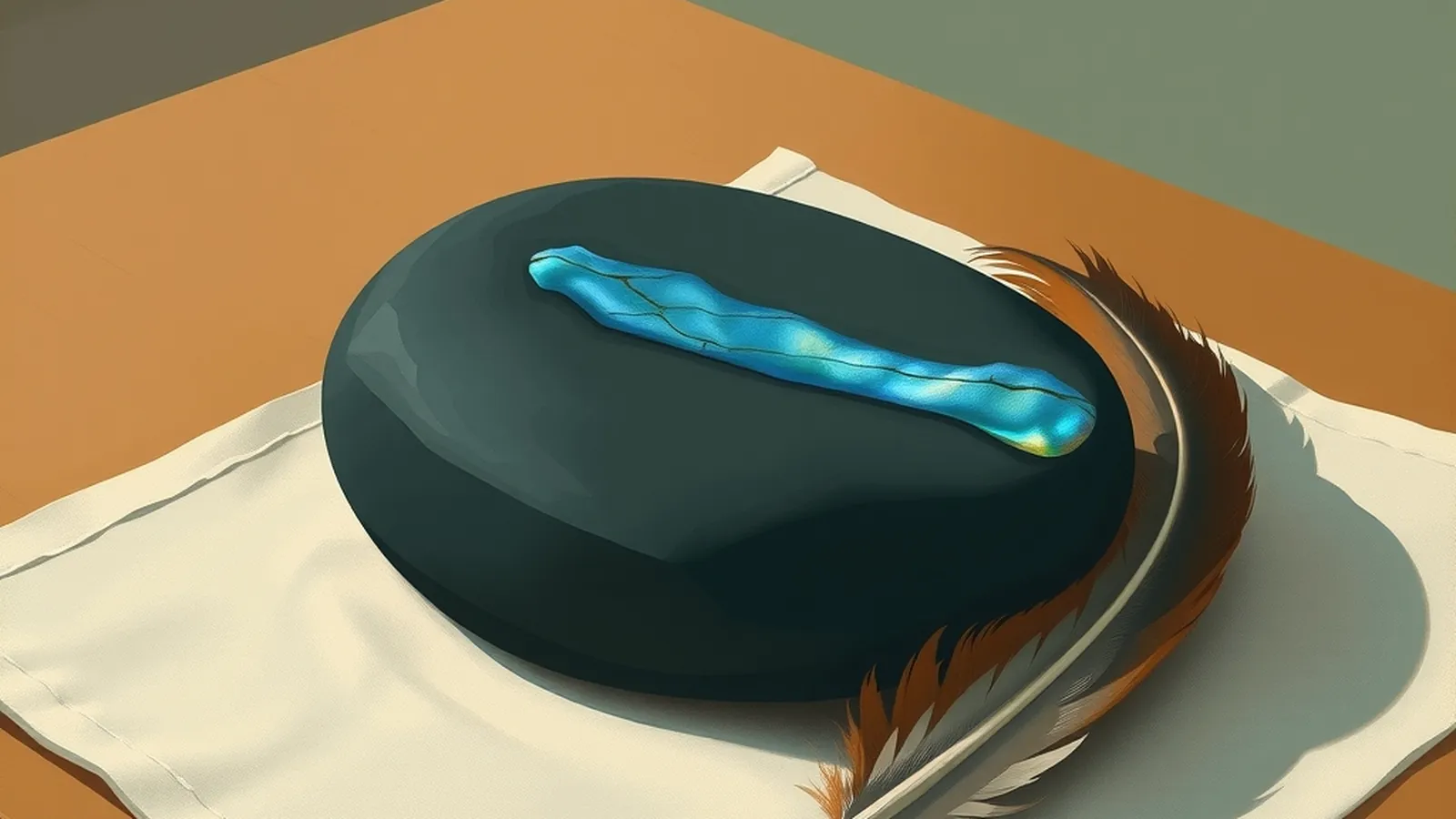
Labradorite is a gray-green feldspar that flashes with bright blue, green and sometimes gold or orange when light hits it at the right angle. In crystal tradition it is associated with intuition, transformation and moving through change, and practitioners often call it a stone of mystery or magic. Those meanings are beliefs; there is no scientific evidence that labradorite affects intuition, energy or events.
Labradorite is one of the stones covered in our crystal meanings guide. This page explains where its color comes from, what people believe about it, and how to use it as a thoughtful focus object.
What labradorite is
Labradorite is a member of the feldspar group, one of the most common mineral families in the Earth's crust. It is named after Labrador, in Canada, where it was found. At about 6 to 6.5 on the Mohs scale, it is a bit softer than quartz.
What causes the flash
The shimmer is called labradorescence. Inside the stone are extremely thin layers that bounce light back and forth, and the reflected light interferes with itself to produce vivid color. It works a bit like the rainbow sheen on a soap bubble.
Because the effect depends on the angle of those layers, the color appears only when you hold the stone just so. Tilt it a few degrees and a polished slab can go from electric blue to dull gray. That's why labradorite is usually cut flat or gently domed, with the flash facing the viewer.
You may also see the trade name "spectrolite," which is used for labradorite from Finland with an especially wide range of colors.
Traditional and modern meanings
The associations below come from modern crystal practice and folklore. They are beliefs, not proven effects.
- Intuition: Practitioners describe labradorite as a stone that sharpens inner knowing and hunches.
- Transformation: Its hidden color, revealed only from the right angle, has made it a symbol of change, new perspectives and potential that isn't obvious at first.
- Protection of your energy: Some crystal books describe it as a shield for sensitive people in busy environments.
- Mystery and imagination: It's popular with people drawn to dreams, creativity and inner exploration.
There's no scientific evidence that labradorite, or any crystal, has healing or energetic effects. Small experiments comparing real and fake crystals have found people reported similar sensations with both. That doesn't make the practice pointless; it means the value comes from the attention and meaning you bring. Our crystals for beginners guide explains this approach in more detail.
Chakra and zodiac associations
Modern chakra charts most often link labradorite with the third eye chakra, associated in that tradition with intuition and insight. Some sources pair it with the throat or crown chakras instead, which is a good reminder that these pairings are modern conventions and differ from teacher to teacher. Zodiac associations vary even more, so feel free to set them aside.
Labradorite and times of change
Many people reach for labradorite during transitions: a move, a career shift, the end of a relationship, or a period of questioning old beliefs. The stone's hidden flash can serve as a metaphor for parts of yourself that only show up from a new angle.
If you're in a season of inner change, our guide to spiritual awakening signs explores common experiences people describe and how to stay grounded through them. Labradorite can be a quiet companion to that kind of reflection, as long as it supports your thinking rather than replacing it.
How people use labradorite
- Reflection object: Turning a polished piece slowly in the light while you think through a decision.
- Journaling companion: Keeping it on the page or desk as a cue to write honestly.
- Jewelry: Pendants and rings are popular because the flash moves as you do.
- Altar or shelf piece: A larger polished slab displayed where light catches it.
Tie it to a real action. If labradorite stands for seeing things differently, let it remind you to ask one trusted person for their honest view on a choice you're weighing.
Labradorite and its family stones
These stones share themes with labradorite:
- Moonstone is its close cousin, another feldspar, with a soft billowy glow instead of a bright flash, and both are linked with intuition.
- Amethyst is the other stone commonly paired with intuition and the third eye, with a calmer, more restful reputation.
- Obsidian shares the dark, reflective look and is used in similar inner-work practices, though it is volcanic glass rather than a crystal.
Care and safety
- Water: A brief rinse in lukewarm water is generally fine. Avoid long soaks and dry it right away.
- Salt and chemicals: Skip salt cleansing and harsh cleaners, which can scratch or dull the polish.
- Knocks: Labradorite has natural cleavage planes and can chip or split if dropped. Store it padded and apart from harder stones.
- Heat: Avoid sudden temperature changes, such as moving it from a hot windowsill to cold water.
- Never ingest: No gem elixirs, and keep small pieces away from young children and pets.
Buying tips
- Tilt it under light: Real labradorite shows color only at certain angles. Uniform color from every direction suggests glass, a coating or a different material.
- Expect variation: Many genuine pieces show flash in only part of the stone. Full, even flash costs more, and that's normal.
- Check the name: Similar-looking feldspars are sometimes sold under different trade names. Ask the seller which mineral it is.
- Skip promises: Listings that claim the stone will heal, protect or transform your life aren't supported by evidence. Our guide to red flags in spiritual programs covers similar tactics.
- Ask about origin: Sellers who know where a stone was mined are a better bet for ethical sourcing.
A short perspective practice
- Hold the labradorite under a lamp and find the angle where it looks plain gray.
- Slowly tilt it until the color appears. Notice how small the shift was.
- Think of a situation that feels stuck. Ask: "What small change in angle might show me something new?"
- Write down one alternative view, even if you're not sure you believe it yet.
Journal prompt: What part of me only shows up in certain light, and where would I like to let it show more?
Want a structured program to go deeper?
Reading is a start. Some people do better with a guided course they can follow day by day. This button opens a manifestation or meditation program from one of our advertising partners.
See the partner program →We may be paid when you click. The program shown can change. Read its terms before you buy anything. How this works
Frequently asked questions
What is labradorite used for spiritually?
In crystal tradition, labradorite is associated with intuition, transformation and inner reflection. These are beliefs without scientific evidence, but many people use the stone as a focus object during times of change.
Can labradorite go in water?
A quick rinse with lukewarm water is usually fine, but avoid long soaks, salt and harsh cleaners. Labradorite is a little softer than quartz and can have internal cleavage planes that water and pressure may stress.
How can you tell if labradorite is real?
Real labradorite looks fairly plain gray until you tilt it, then flashes of color appear at certain angles and disappear at others. Color that is visible from every angle suggests glass, coating or another material.