Yoga Nidra: A Beginner's Guide to Yogic Sleep
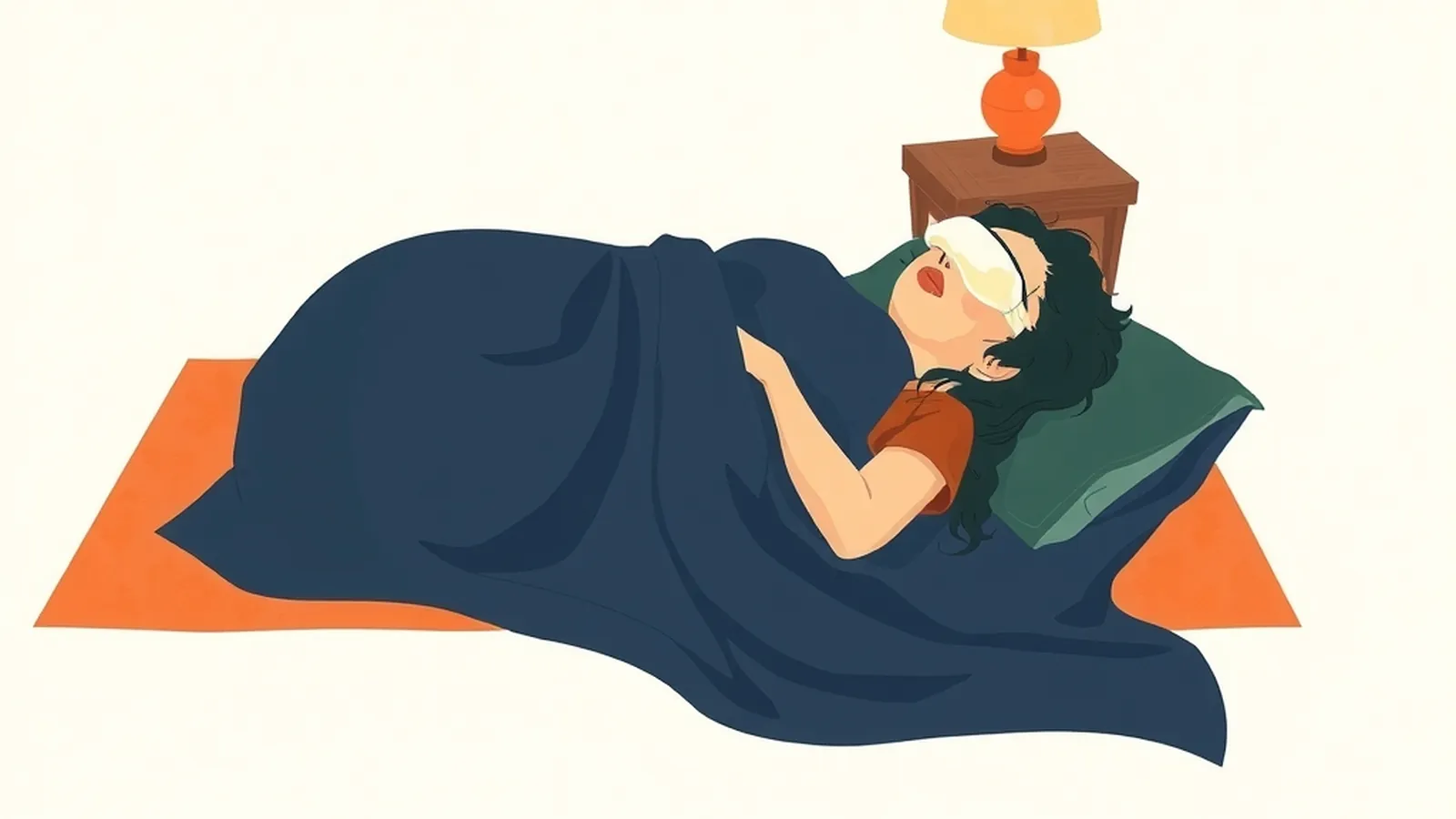
Yoga nidra, often translated as "yogic sleep," is a guided meditation done lying down, in which a voice leads you through your body, breath, sensations and images while you rest deeply but stay aware. It feels like hovering at the edge of sleep. Because you don't need to sit up or hold your focus on your own, many people find it one of the easiest practices to begin with.
It's one of the most restful styles in our guide to types of meditation.
Where yoga nidra comes from
The idea of conscious, sleep-like rest has ancient roots in Indian yogic and tantric traditions, and the phrase yoga nidra appears in older texts. The structured, step-by-step method most people learn today, however, is modern. It was developed and popularized by Swami Satyananda Saraswati of the Bihar School of Yoga in India during the 1960s and 1970s, drawing on those older practices.
Since then, many teachers have adapted his sequence. Some keep the original stages closely; others create shorter or secular versions. You'll find variations, but most share the same backbone described below.
The eight stages of yoga nidra
| Stage | What happens |
|---|---|
| 1. Preparation | Lie down, get warm and settle |
| 2. Sankalpa | Silently state a short resolve |
| 3. Rotation of awareness | Attention moves quickly through named body parts |
| 4. Breath awareness | Counting or following the breath |
| 5. Opposite sensations | Feeling pairs like heavy and light, warm and cool |
| 6. Images | Brief pictures named one after another |
| 7. Sankalpa again | Repeating your resolve |
| 8. Return | Slowly coming back to the room |
The rotation stage can look like a body scan, and the two are related. The difference is pace: a body scan lingers on each area and notices sensation in detail, while yoga nidra moves briskly, simply touching each part with attention as its name is spoken.
How to practice: a 20-minute yoga nidra script
Yoga nidra works best when you aren't reading, so record this script slowly in your own voice, pausing where you see "pause," or ask someone to read it to you.
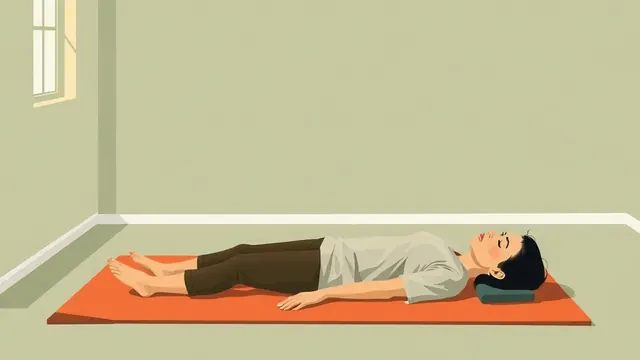
- Prepare. Lie on your back on a bed, mat or rug. Put a pillow under your head and one under your knees if your lower back likes it. Cover yourself with a blanket, because the body cools as it rests. Let your arms rest a little away from your sides, palms up. Close your eyes. Pause.
- Set your sankalpa. Choose one short, present-tense sentence about who you want to be, not what you want to get. For example: "I am steady and kind," or "I rest when I need rest." Say it silently three times. Pause.
- Rotate awareness. Say each body part and simply move your attention there, without lingering: "Right thumb. Index finger. Middle finger. Ring finger. Little finger. Palm. Back of the hand. Wrist. Forearm. Elbow. Upper arm. Shoulder. Armpit. Right side of the waist. Hip. Thigh. Knee. Shin. Ankle. Heel. Sole. Big toe..." Repeat on the left side, then the back of the body, then the face: forehead, eyebrows, the space between the eyebrows, eyelids, nose, cheeks, lips, chin. Finish with "the whole body, the whole body together." Pause.
- Count the breath. Silently count breaths backward from 27 to 1: "Breathing in, 27. Breathing out, 27. Breathing in, 26..." If you lose count, start again at 27. There's no need to finish. Pause.
- Feel opposites. "Feel the body becoming heavy, sinking into the floor... heavier and heavier." Pause. "Now feel it becoming light, as if it could float." Pause. "Feel warmth, like sitting in summer sun." Pause. "Now coolness, like stepping into shade by a river."
- Picture images. Name a few images, a few seconds apart, and just let each one appear, faintly or not at all: "A lit candle. A quiet lake at dawn. A red apple on a table. An old wooden door. A field of tall grass. A mountain under snow." Pause.
- Repeat your sankalpa. Say the same resolve silently three times, with the same words as before.
- Return slowly. "Become aware of the breath. The sounds in the room. The floor under you. Wiggle your fingers and toes. Roll to your side and rest there for a moment before sitting up."
A note on the "hours of sleep" claim
You may see claims online that one hour of yoga nidra equals several hours of sleep. There's no good evidence for that. Yoga nidra may feel deeply restful, but it isn't a substitute for sleep. If you regularly struggle to fall or stay asleep, or feel exhausted during the day, talk to a doctor, who can look for causes and may suggest approaches such as cognitive behavioral therapy for insomnia. For bedtime routines, our guide to meditation for sleep covers practices designed to help you wind down.
Who yoga nidra suits
Yoga nidra often suits people who find sitting uncomfortable, who are tired or overwhelmed, or who want a gentle practice at the end of a long day. It's also a good fit for beginners who like being guided.
It may be less ideal if you want to build the skill of directing your own attention, since the voice does much of the work. It also isn't a great fit right before tasks that need you alert, because you may come out groggy.
Common difficulties
"I always fall asleep." Very common. Try practicing earlier in the day, with a thinner pillow, or with one forearm raised slightly from the elbow so it drops if you nod off.
"I can't see the images." Not everyone forms clear mental pictures. A word, a feeling or a vague sense is enough. If you enjoy the image stage, visualization meditation lets you spend longer with imagery.
"My sankalpa feels like wishful thinking." Keep it about a quality you can practice, like patience or steadiness, and then act on it during the day. People who explore manifestation often notice that the sankalpa resembles the SATS method, which also uses the drowsy state before sleep. The difference is that a sankalpa is a personal resolve, not an attempt to bring about a specific outcome.
"Lying still brings up uncomfortable feelings." Open your eyes, sit up, and press your feet into the floor. If you have a history of trauma, the rotation and imagery stages can sometimes feel unsettling. Talk with a doctor or licensed therapist about which practices feel safe for you.
What research says
Research on yoga nidra is growing but still limited compared with other styles. Some studies suggest it may help people feel more relaxed and less stressed, though many studies are small and results vary. Yoga nidra is not a treatment for insomnia, anxiety or any medical condition, and it doesn't replace professional care.
For the basics of building a regular practice, see our meditation for beginners guide.
Want a structured program to go deeper?
Reading is a start. Some people do better with a guided course they can follow day by day. This button opens a manifestation or meditation program from one of our advertising partners.
See the partner program →We may be paid when you click. The program shown can change. Read its terms before you buy anything. How this works
Frequently asked questions
Is yoga nidra the same as sleeping?
No. The aim is to rest deeply while staying faintly aware of the guide's voice. You may drift in and out, and falling asleep is common, but the practice is designed to keep a thread of awareness.
Does one hour of yoga nidra equal hours of sleep?
This claim circulates widely online, but there is no good evidence for it. Yoga nidra may feel restful, but it isn't a replacement for a full night's sleep.
What is a sankalpa in yoga nidra?
A sankalpa is a short, positive resolve stated in the present tense, such as "I meet each day with patience." You repeat it silently at the beginning and end of the practice.