Meditation for Sleep: A Simple Bedtime Practice

Meditation for sleep is a short, quiet practice you do in bed or just before it to help your body and mind shift out of "day mode." Instead of trying to force sleep, you give your attention something slow and soothing to rest on, so the busy thoughts have less to grab. Most sleep meditations last 5 to 20 minutes, and it's completely fine if you fall asleep before the end.
This page is part of our guide to types of meditation. Below you'll find a full bedtime script, a shorter reset for the middle of the night, and honest notes on what meditation can and can't do for sleep.
Where sleep meditation comes from
"Meditation for sleep" isn't a single tradition. It's a modern, practical use of older techniques: relaxed body awareness, the guided rest of yogic practices, and simple breath counting found in many contemplative traditions.
What sets a sleep meditation apart is its goal. In most meditation, you're trying to stay awake and alert. At bedtime, you're doing the opposite: lowering the volume on effort and letting your attention get softer and softer.
Before you begin
- Get into bed ready to sleep. Teeth brushed, alarm set, phone across the room.
- Dim the lights early. Lower lights before bed are a simple cue that the day is ending.
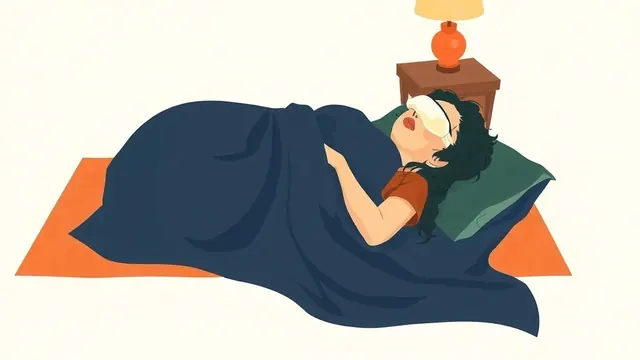
- Lie in your normal sleeping position. You don't need to lie flat on your back. Curl up on your side if that's how you sleep.
- Let go of the outcome. The surest way to stay awake is to keep checking whether it's working. Aim to rest, not to sleep.
A 10-minute bedtime script: dimming the house
This script uses a gentle image: walking through a house in your mind and turning off the lights, one room at a time. Read it a few times so you can follow it from memory, or record it slowly in your own voice.
- Settle. Lie down and let your body sink into the mattress. Take three breaths where the out-breath is a little longer than the in-breath.
- Notice the bed holding you. Feel the places where your body touches the sheets: your heels, the backs of your legs, your shoulders, your head on the pillow. Let the bed do the work of holding you up.
- Picture the front door. Imagine standing just inside the front door of a house. It can be your home or a place you invent. Picture yourself locking the door. The day is outside now.
- The first room. Walk slowly into the first room. Notice one or two details: a chair, a rug, the color of a wall. Find the light switch, and turn it off. The room goes soft and dark.
- Breathe once between rooms. Before moving on, take one slow breath. Let your shoulders drop a little more.
- The kitchen. Walk into the kitchen. Maybe the counters are clear, maybe a single glass sits by the sink. It doesn't matter. Turn off the light.
- Keep going, more slowly each time. Move through two or three more rooms: a hallway, a study, a bathroom. Each time, notice one detail, switch off the light, and breathe. Let the details get fuzzier as you go. You don't have to picture them clearly.
- The bedroom. Finally, walk into a bedroom. The only light left is a small lamp by the bed. Picture yourself lying down in that bed, the covers warm and heavy.
- The last light. Reach over and switch off the lamp. The whole house is dark and quiet. Nothing else needs to be done tonight.
- Rest in the dark. Let go of the picture. Just feel your breath, slow and easy. If thoughts arrive, picture them as cars passing outside a dark window, and let them go by.
If you're still awake at the end, that's okay. Simply stay with your breath, or start again at a different house.
A shorter reset for the middle of the night
Waking up at 2 or 3 a.m. and lying there thinking is common. A busy picture-based script can feel like too much then. Try this simpler counting practice instead:
- Breathe in naturally. As you breathe out, silently count "one."
- Breathe in. On the next out-breath, count "two."
- Keep counting out-breaths up to ten, then start again at one.
- If you lose count, or find yourself at 23, smile at it and return to one.
Some people prefer a "word drift" instead: pick a random calm word like harbor, and for each letter picture a few unrelated, neutral objects (h: hat, hammock, honey; a: apple, anchor). This is sometimes called a cognitive shuffle. The randomness keeps your mind from building a worrying story.
If you've been awake a long time and feel frustrated, it can help to get up, sit somewhere dim, and do something quiet until you feel sleepy. Lying in bed wrestling with sleep tends to make the bed feel like a place for wrestling.
Who it suits, and who might prefer something else
Sleep meditation tends to suit people whose minds race at night, who replay the day or plan tomorrow as soon as the lights go out. It also suits people who like a predictable bedtime ritual.
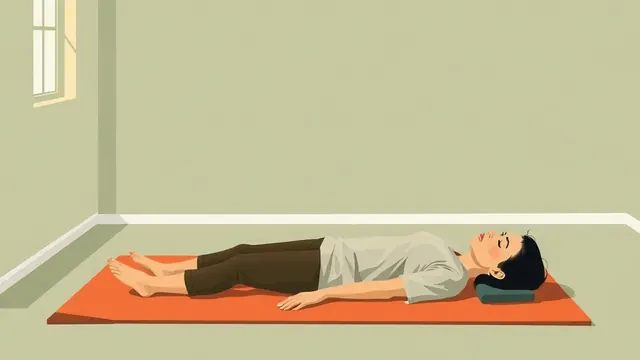
You might prefer something else if picturing scenes keeps you more alert. In that case, try a slow body scan, which focuses on physical sensation rather than images. If silence itself feels loud, a sound bath uses soft, sustained tones to give your attention something to rest on. And if you want a longer, deeply guided practice, yoga nidra is built around lying down in a state between waking and sleep.
Common difficulties
"My mind gets louder when I lie down." That's common: at night, background worries finally have the floor. Try a short "worry list" on paper an hour before bed, so they're parked somewhere other than your head.
"I try so hard to relax that I stay awake." Effort and sleep don't mix well. Treat the script as something pleasant to do, not a test. Some nights you'll drift off fast; some nights you won't.
"I feel anxious in the dark with my eyes closed." Keep a small, dim light on, or keep your eyes softly open. If nighttime anxiety is frequent, our guide to meditation for anxiety offers more grounding options, and a doctor or licensed therapist can help.
What research says
Research on meditation and sleep is active, and some studies suggest mindfulness-based practices may help some people feel they sleep better. Results vary, and meditation isn't a replacement for medical care. It also can't fix sleep that is disrupted by pain, breathing problems, medications, or other health issues.
If trouble sleeping lasts more than a few weeks, see a doctor. They can check for underlying causes and may suggest options like CBT-I. Be cautious of programs or audio tracks that promise to "cure" insomnia; our guide to program red flags explains what to watch for.
Pairing sleep meditation with intention practices
Some people like to finish with one calm intention for tomorrow, then let it go. The pillow method is a bedtime manifestation practice built around writing an intention and sleeping on it. Keep it short, so it doesn't turn into planning.
Want a structured program to go deeper?
Reading is a start. Some people do better with a guided course they can follow day by day. This button opens a manifestation or meditation program from one of our advertising partners.
See the partner program →We may be paid when you click. The program shown can change. Read its terms before you buy anything. How this works
Frequently asked questions
Can meditation help you fall asleep?
Many people find a quiet practice at bedtime helps them wind down, and research on meditation and sleep is active. It isn't a treatment for insomnia, so if poor sleep lasts, talk to a doctor.
Is it bad to fall asleep while meditating?
Not at bedtime. A sleep meditation is meant to hand you off to sleep, so drifting off partway through simply means it did its job.
What should I do if I wake up at 3 a.m. and can't fall back asleep?
Try a few rounds of slow breathing or a short counting practice in bed. If you are still wide awake after what feels like a while, get up, sit somewhere dim and quiet, and return to bed when you feel sleepy.